KIEV, UKRAINE CITY BREAK, (WRITTEN BEFORE THE START OF THE RUSSIAN INVASION IN FEBRUARY 2022)
LOW COST airlines have made Europe so accessible in the last decade or so that many of us are running short of new cities to visit for a weekend break.
After the likes of Paris, Brussels, Rome, Amsterdam on the well-worn tourist paths, eyes have been turning towards the more Eastern European hotspots like Prague, Budapest and Krakow.
Now even these have been exhausted and travellers are turning towards cities without direct connections to Belfast, using Dublin or one of the London airports to get a new city break experience.
So take a bow Ryanair for providing easy access to one of the more unusual and interesting Eastern European capitals, one that is well worth a four or five-day stay.
In the last year the airline launched a direct Dublin-Kiev service providing direct flights to a city that has been in the headlines a lot in the last few years, and again recently, with US President Donald Trump’s controversial ‘quid pro quo’ phone call with the new Ukraine President.
However, it was five years ago that Kiev was all over the world headlines when the city was the centre of popular protests against the pro-Russian government of Viktor Yanukovych who had reneged on mandate to sign a pro-EU association agreement, and opted instead for closer ties with Ukraine’s huge and powerful aggressive neighbour to the east, Vladimir Putin’s Russia.
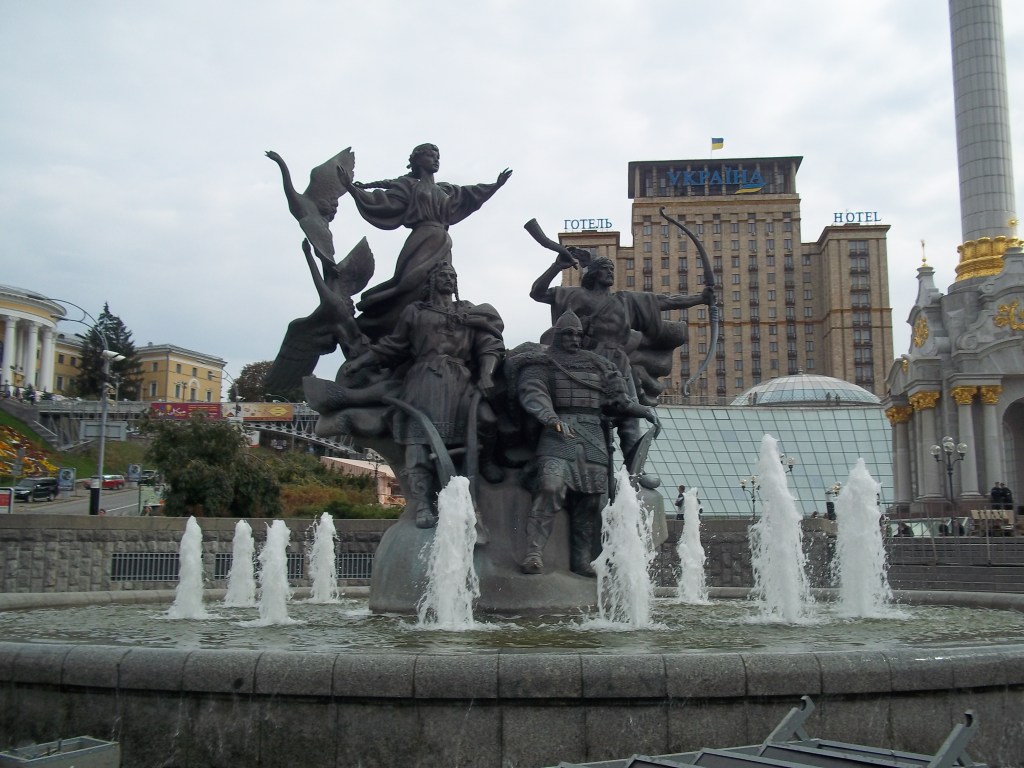
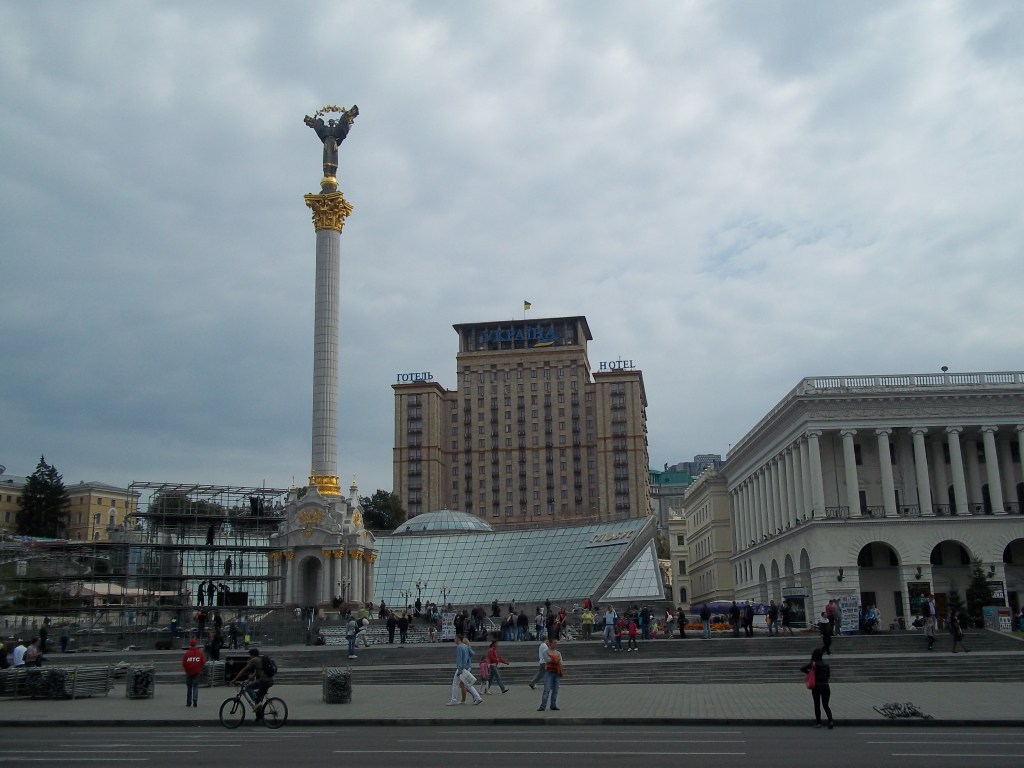
It was not what most of the people wanted, especially the young, upwardly mobile, intelligent and ambitious, who were ringleaders in a protest which began in November 2013 on The Maidan, Kiev’s hugely impressive Independence Square area and lasted for 92 days, Europe’s biggest and longest peacetime demonstration.
With half a million people in the square at one time, the Maidan protests dwarfed similar political mass movements against the Soviets in the Fifties and Sixties in cities such as Prague and Budapest.
When the peaceful Maidan protests were eventually met with the bullets and batons of the Berkut special police, and some deadly snipers of unknown affiliation and origin, operating it’s generally presumed under orders from the Yanukovych government and perhaps influenced by Soviet agents, the anger of protesters brought down the government. The Party of the Regions leader Yanukovych fled to Crimea, then still a part of Ukraine, and eventually to Russia, where he remains, leaving behind the most appalling example of obscene wealth – and even his own zoo – at his palatial residence outside Kiev.
Five years later much of the hope and almost innocent aspirations of the protesters had all but dissipated, that is until the sensational arrival on the political scene of Volodimir Zelenskiy, a TV comedian with no experience of politics (except in his TV show) who routed the incumbent Petro Poroshenko with 70 per cent of the popular vote.
To his credit however, Zelenskiy with his Servant of the People party has not been afraid to start the fight against corruption but is already running into trouble with his efforts to bring the hybrid war in the east of the country with Russia to an end. His plans for running elections in the Dombas have already met with street protests fearing Ukraine’s inexperienced leader will be led up the garden path by Putin, who has of course a vested interest in keeping the pot boiling and supporting the separatists in a so-called hybrid war.
The conflict zone is a long way from Kiev however, and the city is an amazing capital with wonderful buildings, gleaming church domes aplenty, and a wonderful setting on the banks of the great River Dnipro (Dneiper).
The river attracts locals and tourists alike in summer with its beaches, islands and hydro park, a huge makeshift outdoor gym which has to be seen to be believed, offering sun worshipping, beach volleyball, football, basketball, bungee jumping from a giant crane and jet skiing.
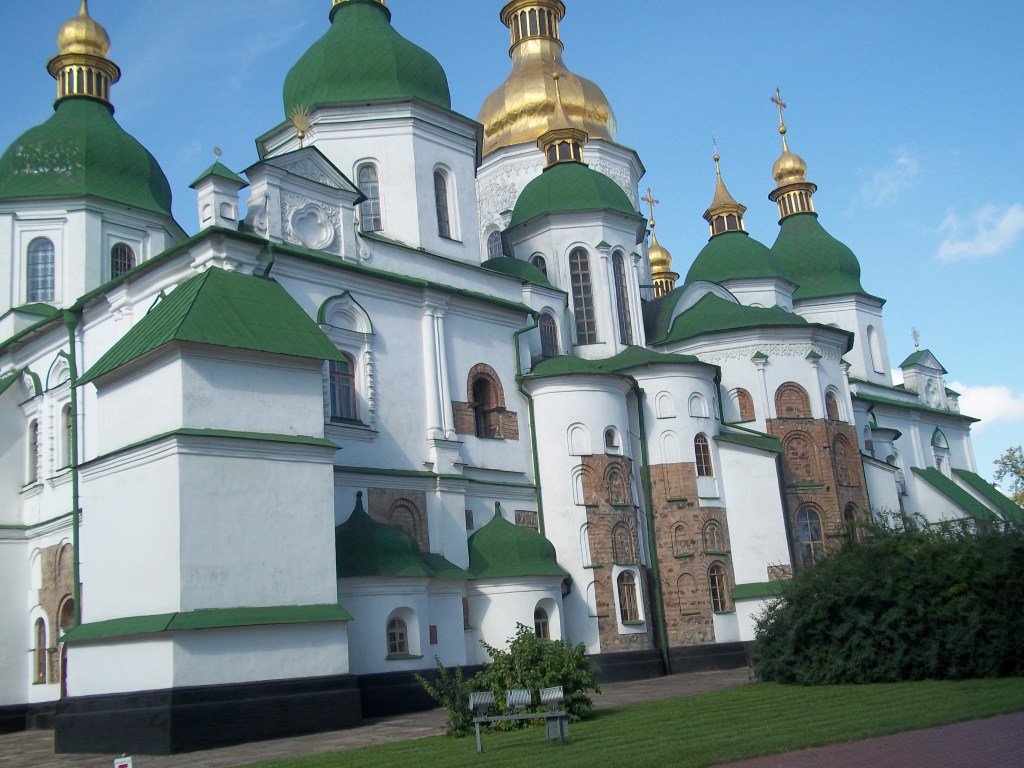
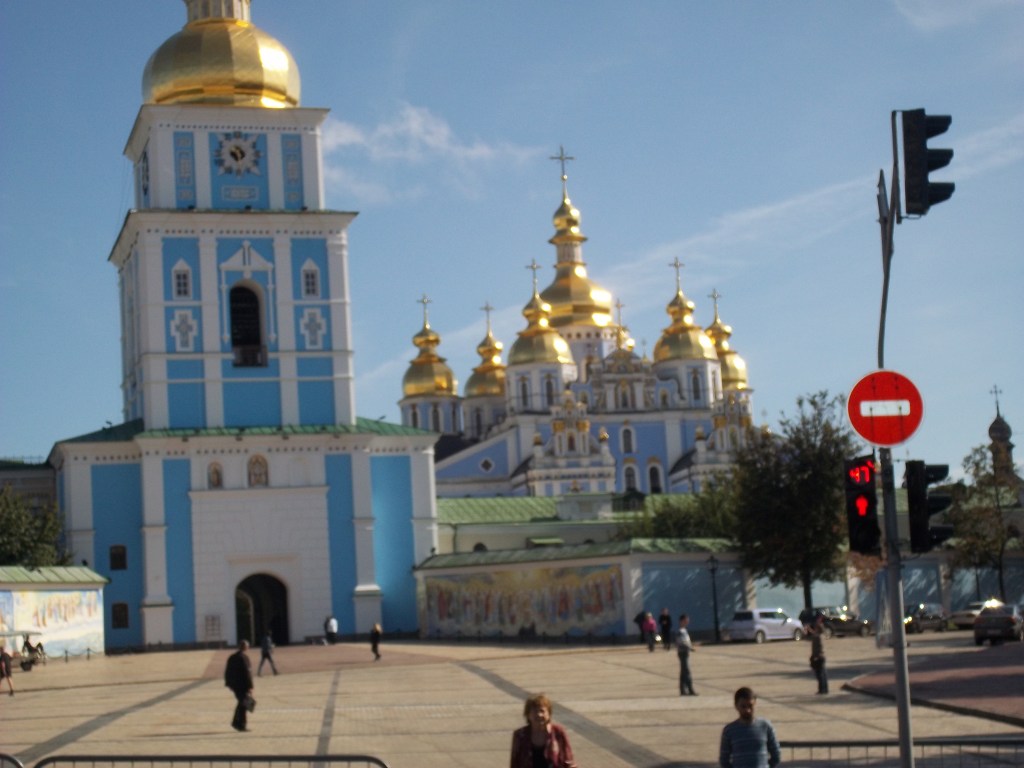
But if it’s golden domed Russian or Ukrainian Orthodox churches you are looking for, Kiev will not disappoint. St Michael’s Gold Domed Monastery is five minutes walk from Independence Square and impossible to ignore with tis gold domed blue church, named after Kiev’s patron saint. Also, St Sophia’s Cathedral has a truly astonishing interior and is the city’s oldest standing church building. Many of the mosaics are original frescoes, dating back to the 12 century when the cathedral was build to celebrate Prince Yaroslav’s victory over local raiders. The building’s golden domes and 76-metre tall bell tower are 18th century baroque add-ons.
If you have time also take in St Volodymyr’s Cathedral which has the prettiest interior. Huge murals include a painting of St Volodymyr the Great’s Baptism into Orthodox Christianity and of the city’s residents in the Dnipro River for a huge mass baptism.
But one of Kiev’s top tourist attractions and indeed holiest places in the entire country is the Lavra area. Every day thousands of pilgrims and tourists make the short walk from the metro (it boasts the world’s deepest station) to the 60 acres of grass green hills overlooking the Dnipro. With its huddle of gold domed churches above ground and a labyrinth of underground tunnels lined with mummified monks the Lavra is a must on your visit to Kiev.
The catacombs were dug out more than 10,000 years ago by monks where they worshipped, studied and in fact lived. When they died their bodies were preserved without any embalming by the cave’ cool temperature and dry atmosphere.
The Lavra is divided into two, the upper and lower lava, one owned by the Kiev Government and church, and the lower owned by the Moscow branch of the Orthodox Church which contains the caves – at time of writing there is a schism between the two Orthodox churches, which has its roots in the political upheavals of the last few years.
The Lavra is the biggest tourist attraction in the whole of Kiev and needs at least half a day to explore and get the full benefit from your visit. Different rules of admission apply to different parts of the Lavra but it’s a good idea to take at least a two-hour guided tour to get a flavour of the place. Strict dress codes for visitors apply.
Many football fans have head of the famous Dynamo (pronounced Deen Amp) Kiev soccer team but few will know that the club’s players were inspiration for the film Escape to Victory which starred Sylvester Stallone and Pele. When the Germans occupied Kiev in the Second World War, they ordered the club’s payers to play a German army side – and lose! They played four times and each time Dynamo won, despite being order not to, by the occupiers. This was too much for the Nazis and a number of the players were executed at Babi War on the outskirts of the city along with many thousands of others. Almost the entire Kiev’s Jewish population were also executed here and the bodies buried in the ravine. There is a memorial to the footballers at the Dynamo Kiev stadium.
Several of Kiev’s top tourist attractions involve conflict, with the Museum of the Great Patriotic War looming large on the skyline from many parts of the city. You will see it coming in from the airport as you cross the Dnipro from the East Bank.
That’s because the site is marked by a huge 62-metre tall statue of a warrior woman called Rodina Mat, literally ‘Nation’s Mother’ in English, but formally called Defence of the Motherland monument. It is particularly impressive (or ghastly) at night-time when floodlit and is a key part of the museum which was built in 1981 to honour the defenders of Kiev from the Nazis, (almost a million Soviet soldiers were taken prisoner when the city fell – most of them died in appalling privations as POWs). It’s a sombre, Soviet-era exhibition with some truly shocking images including bullet riddled skeletons of vehicles retrieved from the ongoing war in the Dombas. However, the highlight for many is the fact that you can literally get up close and personal with the gigantic female warrior, nicknamed the Iron Lady, by taking an elevator right up inside her head!
A couple of the war-time sites worth taking in are the Holmodor (our Great Famine) Memorial and Babyn or Bai Year, mentioned previously, where up to 100,000 people were murdered by the Nazis. When the Germans took over Kiev they marched the entire Jewish population out to Babi Yar and shot 34,000 people and pushed their bodies into a ravine. More killings followed which also involved gypsies, partisans, the disabled, and even the footballers, but all that’s left today is a green space where you can look into the remaining ravine, and a couple of monuments, one a simple Jewish affair and the other a dramatic Soviet-style edifice, a short walk away from the actual site.
The Holmodor exhibition is dedicated to the millions of Ukrainians who were starved to death by Stalin in the early thirties, estimates range from four to eight million, and Ukraine has been fighting to get this truly shocking Society policy, little known by most of us int he West, recognised as genocide.
Still on memorials, you cannot visit Independence Square without reading and seeing memorials and shrines to the killings of up to 107 civilians in the protests which led to Yanukovych’s overthrow – the Russian view is the whole thing was organised by the Americans. There’s shrines everywhere to the Heavenly Hundred as they are called and are now regarded by the vast majority inUkraine as martyrs in the country’s ‘Revolution of Dignity.”
There is a little shrine to each individual as you walk up the hill on Institutskaya Street, where a lot of the shooting took place, complete with photograph and information (in Ukrainian) about them. The oldest victims was an 82-year-old man, with a woman of 77 and several teenagers included in the dead. A museum is being built on the site.
But Kiev is not all about protests and wars. It has hundreds and hundreds of beautiful buildings, apart from the churches and superb shopping, quirky and interesting museums, with great tourist retail stalls under the main Khreshchatyk Street and classy upmarket stores like Globus on Independence Square – centres which obviously cater more for Kiev’s ogliarch class which holds 95 per cent of the country’s wealth.
Of course, the vast majority of ordinary Ukrainians can only dream of shopping at one of the many designer and international outlets in the city centre. You will in fact see many of the Soviet-era flats where the ordinary people live, as you drive past many of them on the east side of the Dnipro on your way into Kiev from the airport.
It’s a very interesting and historical capital city with a definite Soviet influence…..
HERE’S some useful info if it’s your first time in Kiev, or for that matter, Ukraine:
CURRENCY: Most restaurants and shops take credit cards, particularly American Express and MasterCard. But the local currency Hyrvna (UAH – pronounced Grev-na) cannot be obtained outside Ukraine, so take USD or Euros to exchange – dollars are best. Not every bank or currency exchange will take sterling but you are never far away from a money exchange in central Kiev.
A guide to the fluctuating value of the Hyrvna is that it exchanges for around 25 to the US dollar at the moment, whereas when I first visited Ukraine 10 years ago it was just eight UAH to the Dollar and !2 to £1 sterling. Now you get about 32 to the £1 – good for tourists but bad for locals.
Not surprisingly, Kiev and Ukraine in general is astonishingly good value for money. I put Macdonalds to the test on Khreshchatyk Street in the centre and got a Big Mac, fries and a large orange juice for 89 UAH, less than £3. A cappuccino was less than £1 in a restaurant just off Independence Square… how’s that for value?
GETTING AROUND: You can get from Boryspil Airport by Bus, but if it’s your first visit to Kiev it’s best to organise a taxi to pick you up and take you to your hotel. The price for a private car ordered in advance should be around 24 Euro to 28 Dollars, as the airport is a good half-hour drive from the centre. Do not be tempted to accept the blandishments of the taximen as you exit the arrivals area at the Airport. Ukrainian taxi drivers are notorious rip-off merchants and fleecing foolish foreigners is their forte.
The Metro is a handy and fast way to get around and is one fo the deepest systems in the world. Many of the stations are tourist attractions in their own right because of their style and architecture, and the deepest station is some 12 storeys below ground. There are also trolleybuses, some trams on the outskirts and everywhere the ubiquitous marshrutkya, a sort of cross between a bus and a minibus. They’re extremely cheap, quite often packed, but the workhorse of Kiev and the whole of Ukraine. Hot and stuffy in the summer and dirt cheap, they’re how most locals get around. But watch your wallet.
CHERNOBYL: Definitely the ‘in’ day tour from Kiev is a trip to the damaged nuclear reactor near the town of Prypat, a ghost town since the day of the explosion. Visitor numbers have gone up more than 50 per cent since the recent HBO mini series Chernobyl was screened three months ago. Visitors will be tested for radio activity going in and out of the area and are closely monitored as they trudge round the abandoned streets and flats. Most poignant is the derelict childrens’ fun park which is silhouetted by the Big Wheel which was just about to open for the first time when the explosion took place. Trips are now officially approved by the Government and the day tour takes a couple of hours drive northwards toward the border with Belarus. Luckily for Kiev the nuclear cloud went in the opposite direction to the capital…
SAFETY: Apart from the odd spontaneous demo around Independence Square or government buildings, you should not encounter any more safety worries in Kiev than you would in any other big European city. Take the usual basic precautions and you will be fine. Never take out your wallet or purse at a stall in the street, it’s better to have a few notes in a separate pocket or even money belt instead, to pay for your purchases. Always carry your passport with you in a safe place as the police can demand that you produce it, but it’s advisable to keep a copy in a hotel safe as a fall-back.
The police force in Kiev got a major revamp a few years ago but despite hundreds of new recruits replacing many of the old guard, Soviet-style habits die hard and locals will tell you that the law enforcement officers are still adept at earning a bit on the side, by asking for a few grevnas when pulled over for speeding for example.


