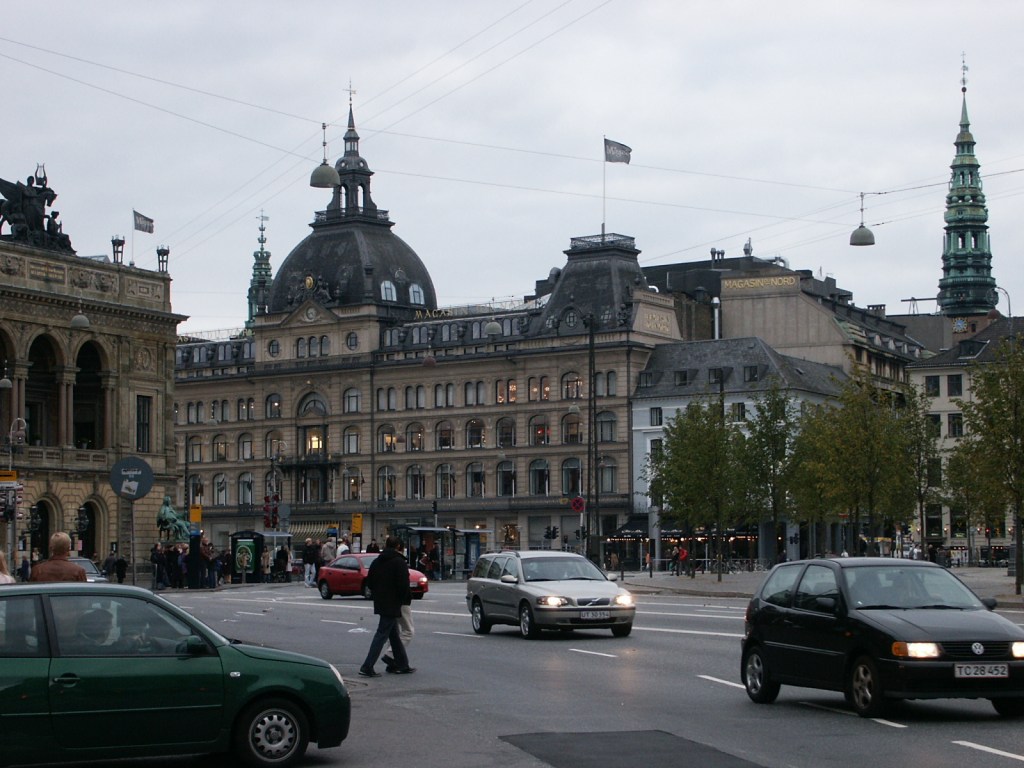
DESTINATION REPORT BY BRIAN OGLE
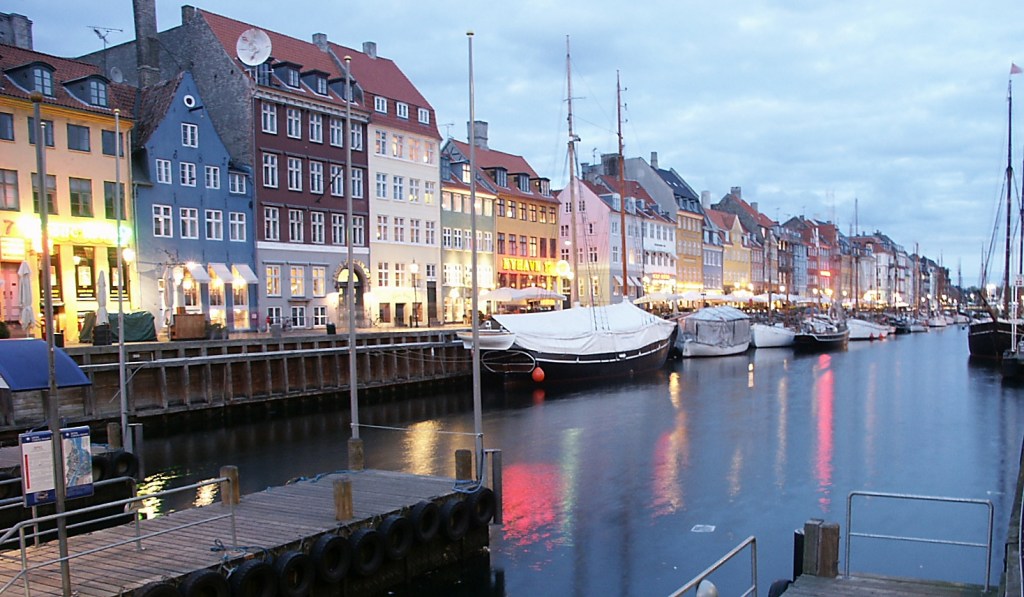
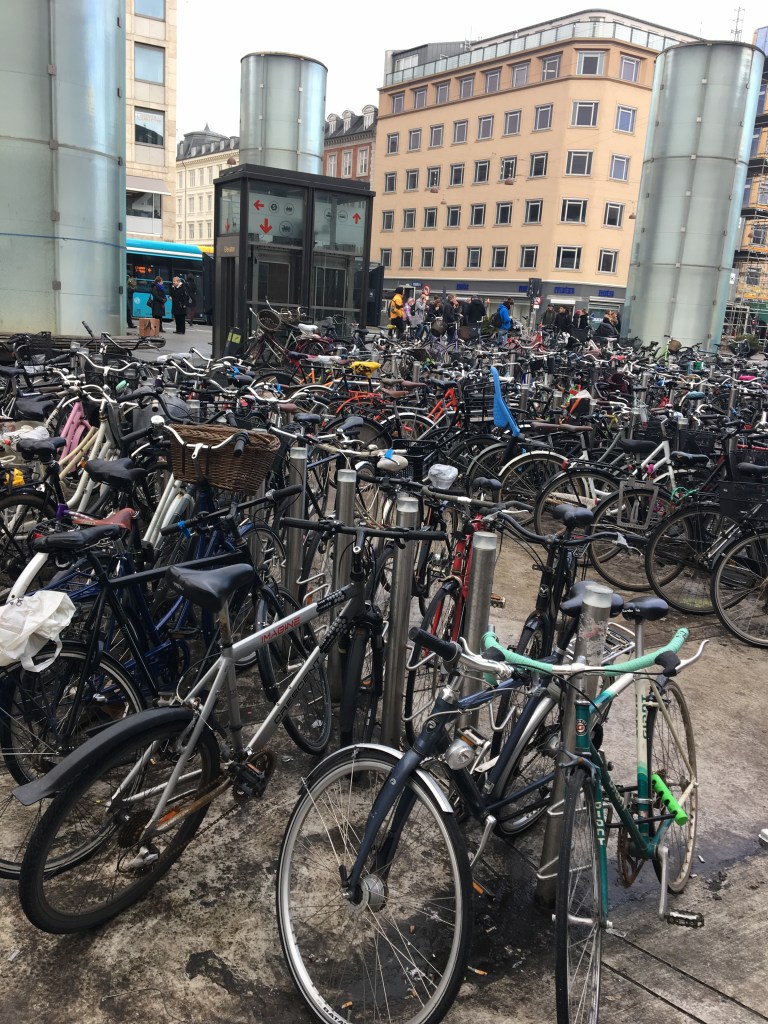
AROUND 50 per cent of Copenhageners get on their bikes each morning, hail, rain or shine, every day of the year, and head off to work; take their kids to school; go shopping, or just use pedal power as a daily constitutional. Because quite simply, Cycling is their Culture.
As my chatty Copenhagen barber Martin explained: “This is a Cycling City. We are like Amsterdamers. Copenhagen and the area around it is absolutely flat, and besides, our cars in Denmark are among the most expensive in the world, and about twice the price of yours in the UK. Now more and more Danes are living in Malmo in Sweden – buying cars there, on the other side of the Oresund bridge, and making the half hour commute by car each day to work in Copenhagen.”
So every time I hear another cycling zealot wanting to turn Atlantic weather systems-buffeted hilly Belfast into some sort of cycling nirvana, I think of my chat with Martin about Copenhagen’s cycling culture.
Biking in Copenhagen and in Denmark in general is a way of life – a passion for all ages. It hits you full square in the face literally when you set your foot off the pavement for the first time in the Danish capital. Cyclists of every age, shape and hue, on every possible cycling contraption, carrying kids, animals, suitcases and groceries are everywhere. And they wear flip flops, trainers, and even tuxedos, evening dresses and stilettos!
I almost landed in hospital minutes after arriving at my hotel, The Absalon, near Copenhagen’s Central Station. I was so preoccupied with car traffic that I failed to appreciate that bicycles are much more of a threat, are much more numerous, just as fast, and pose as great a danger for unwary pedestrians. Just in time I heard a shrill warning shout and was a whisker away from spending the first night of my Danish city break in A&E!
It was a cold wet winter’s day when I was in the Danish capital, and I suppose if cycling not only thrives but is completely oblivious to such conditions, you can only admire the bicycling Danes and admit, it is most certainly in their DNA.
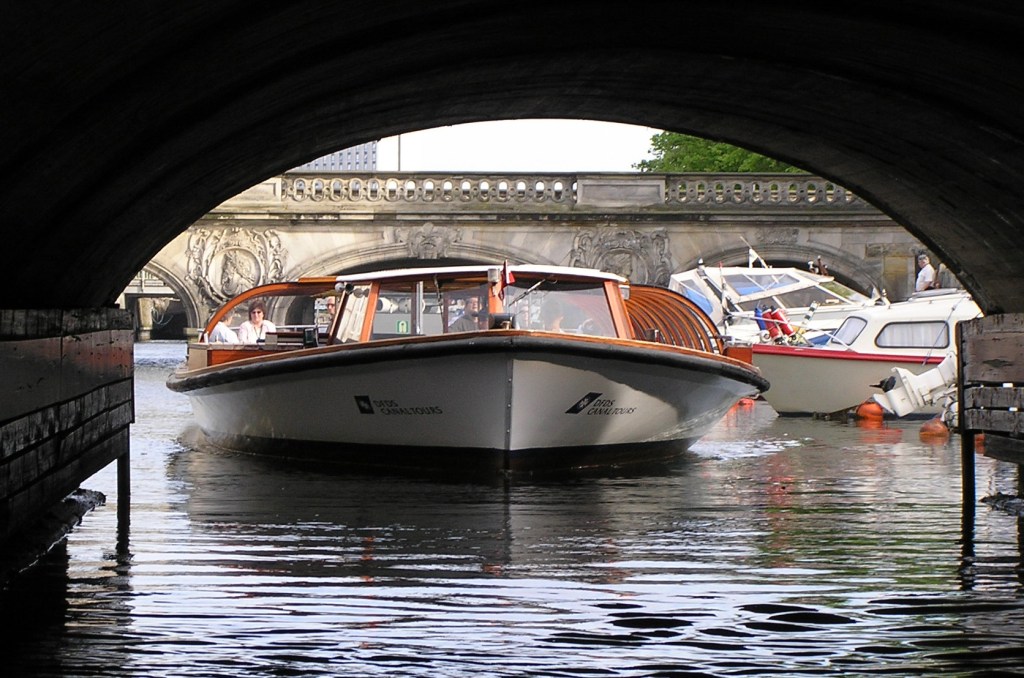
The weather was a real downer, but in a way it served to accentuate what a great city Copenhagen is for things to do indoors….. palaces, museums, castles, most close to the city centre and the city limits, although some requiring a short train journey into the countryside.
Train and bus travel is included in the Copenhagen Card which is an invaluable purchase for anyone on a short break, so if you haven’t bought it in advance, the first stop should be at the tourist office on Vesterbrogade not only to obtain a Card – either for a single day or for several days – but to peruse the wealth of information and to get advice on what to do and see at a particular time.
Most people associate Copenhagen with three things, The Little Mermaid, Hans Christian Andersen and The Tivoli Gardens. And the last named will certainly delight and entrance at almost any season. It opens at Christmas and indeed at other times of the winter. Just check the times in advance if you really want to experience this magical place, especially for families and of course for the Danes themselves.
When I was there Tivoli was covered in artificial snow – even though it was easily cold enough for the real thing – and passersby were standing taking selfies of an unexpected snowstorm blowing out onto the Main Street from the Tivoli entrance.
Tivoli Gardens includes more than 30 restaurants, shows, concert halls, and a couple of dozen rides and is of course best enjoyed in the summer months, but increasingly its attractions during the shoulder and off seasons such as Hallowe’en, Christmas and indeed in bleak midwinter have been attracting increasing numbers of visitors. Light displays are the big draw during the cold, dark winter days with luminous swans on the lake and hundreds of dazzling florescent figurines which make for some dazzling photographs. Of course not all the rides are open in the depths of winter and it takes a special breed of thrill-seeker to go whirling around hundreds of feet in the air when it’s raining and the temperature is just two or three degrees Centigrade. Nevertheless, a visit to Copenhagen should always begin and perhaps even end with a visit to Tivoli.
Just a 100 yards or so from Tivoli is the second of Copenhagen’s big three – a statue of the great man himself, Hans Christian Andersen. Arguably Denmark’s greatest export to the world (excepting Carlsberg of course), and certainly to the world of children, he sits beside the Tivoli and facing the main square and the City Hall.
The Ugly Duckling, The Little Mermaid, The Emperor’s New Clothes, and many more were penned by Denmark’s greatest children storyteller, who was born in the city of Odense, but who lived for a considerable part of his life along Nyhavn, the pretty old docks area of Copenhagen at the end of the main, Strøget, shopping street. Meanwhile, just across the square is the Hans Christian Andersen museum, alongside an other favourite of youngsters – a Ripley’s ‘Believe It Or Not’ exposition. You can take in both in an afternoon. In the same vein, a Guinness Book of Records museum is just a 10-minute walk away down Strøget.
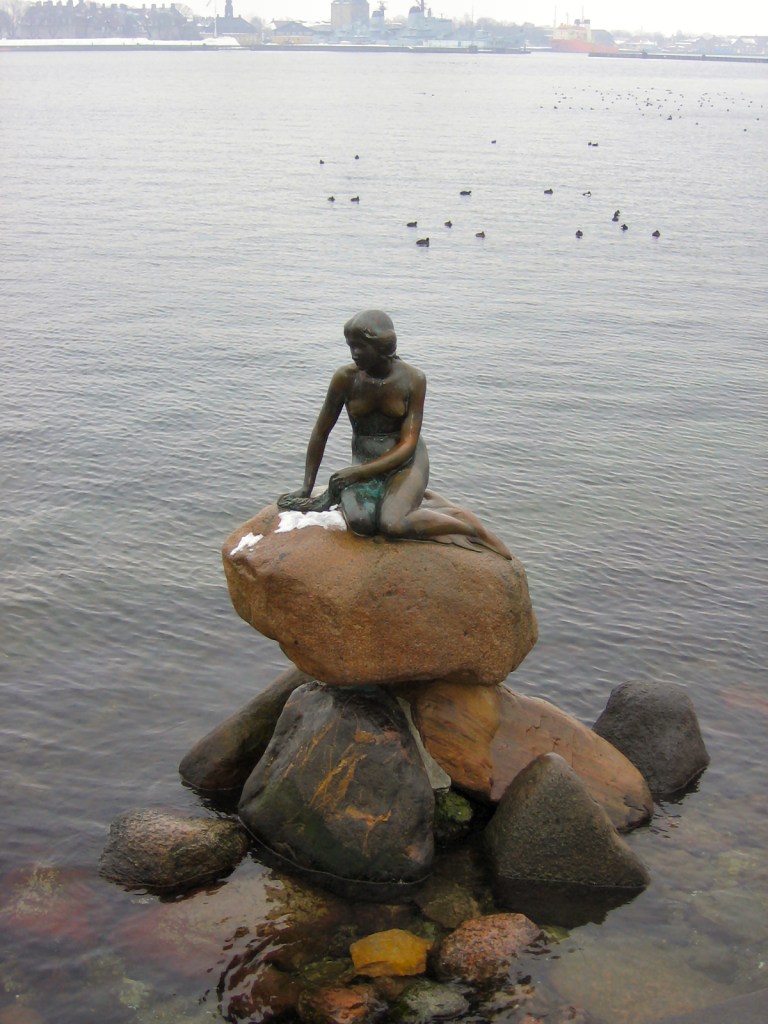
Third of my top three attractions is of course The ‘Little’ Mermaid, overlooking Copenhagen Harbour. The clue is in the name – Little. She is in fact little more than life size and can be a bit of a letdown for those seeing Den Lille Havrue for the first time. In fact you could even walk on by without noticing Copenhagen’s identity icon were it not for a permanent crowd of tourists taking selfies by the harbourside.
The Little Mermaid has been stolen and vandalised several times, but has always been restored to her plinth on a rock by the cruise harbour. If anything her disappearances and her injuries, including at least one decapitation have only made her more popular with visitors.
Across the harbour you will see the magnificent relatively new Copenhagen Opera house, with its stunning modern glass exterior perched on the edge of the water, while just five minutes walk from the Mermaid brings you to the Amalienborg Palace – in fact it’s four palaces facing onto a cobble stone square.
Make a point of being there around noon when the chocolate box soldiers are Changing the Royal Guard. The new guardsmen march from their barracks at Rosenborg 15 minutes away followed by camera clicking tourists and led by a policeman who makes sure they negotiate the traffic signals safely. The four palaces sit facing each other but the current Regent, Queen Margaret only lives in one of them. The Prince resides in another and one is a museum of Royal Antiquities, a big part of which displays the Queen’s amazing talent and passion for clothes design and for creating wonderful and eccentric theatre characters.
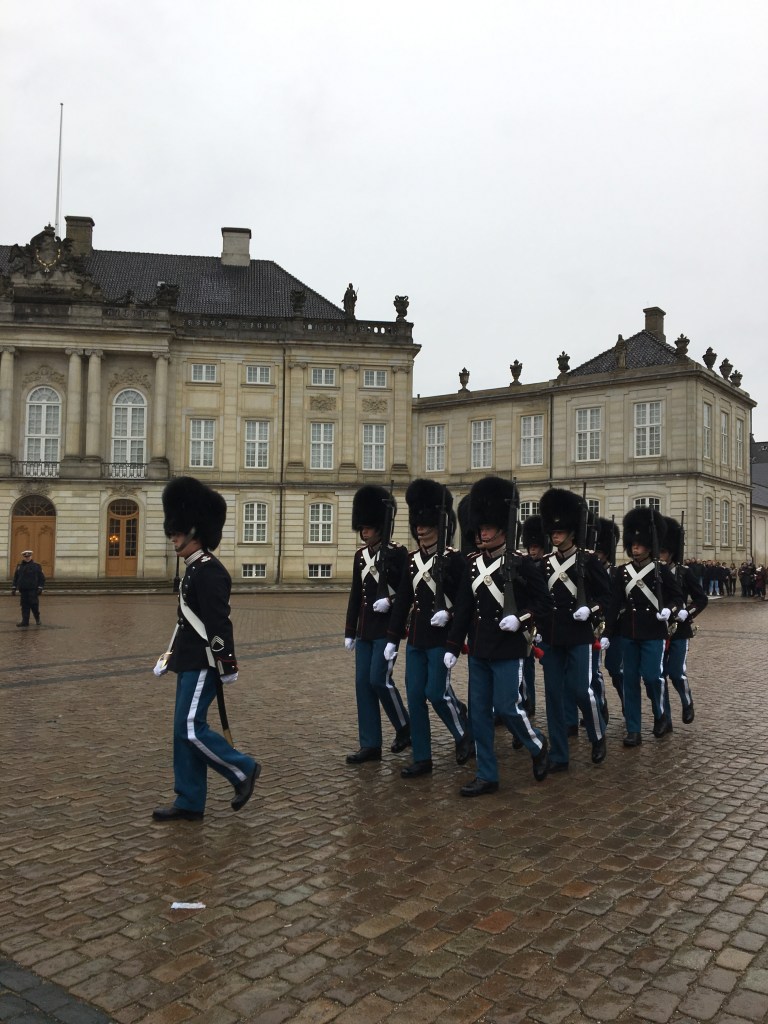
Amalienborg is guarded day and night by the Royal Life Guards and when the monarch is in residence, the King’s Guard also march alongside the Changing of the Guard at noon, accompanied by a band that plays traditional military marches.
Rosenborg Castle meanwhile, where the Guards’ Barracks are located, is open to the public for tours and houses a museum exhibiting the Royal Collections and artefacts spanning a breadth of Royal Danish culture, from the late 16th century to the 19th century. Of special interest to tourists is the Crown Jewels and the Danish Crown Regalia.
Rosenborg’s Castle Garden is the country’s oldest Royal Garden and was embellished in the Renaissance-style by Christian IV shortly before the construction of the main castle. Today, the gardens are a popular retreat for the people of Copenhagen, and attract an estimated 2.5 million visitors a year. While at Rosenborg take the opportunity to visit The National Gallery close by….
One other palace in the city you should certainly not miss is Christiansborg in central Copenhagen which is a palace used by the Royal Family for special occasions, but also doubles as the seat of the Danish Parliament.
Parts of the palace are used by the Monarchy for various functions and events. The Royal Reception Rooms include TheTower Room and The Oval Throne Room where foreign ambassadors to Denmark are received by the Queen, and The Throne Room gives access to the balcony where the Danish monarchs are proclaimed.
The Great Hall is the most imposing room at the palace, housing the hugely impressive Queen’s tapestries, while the Prime Minister also uses The Royal Reception Rooms in connection with State visits by foreign leaders with the Alexandra Hall used for official dinners.
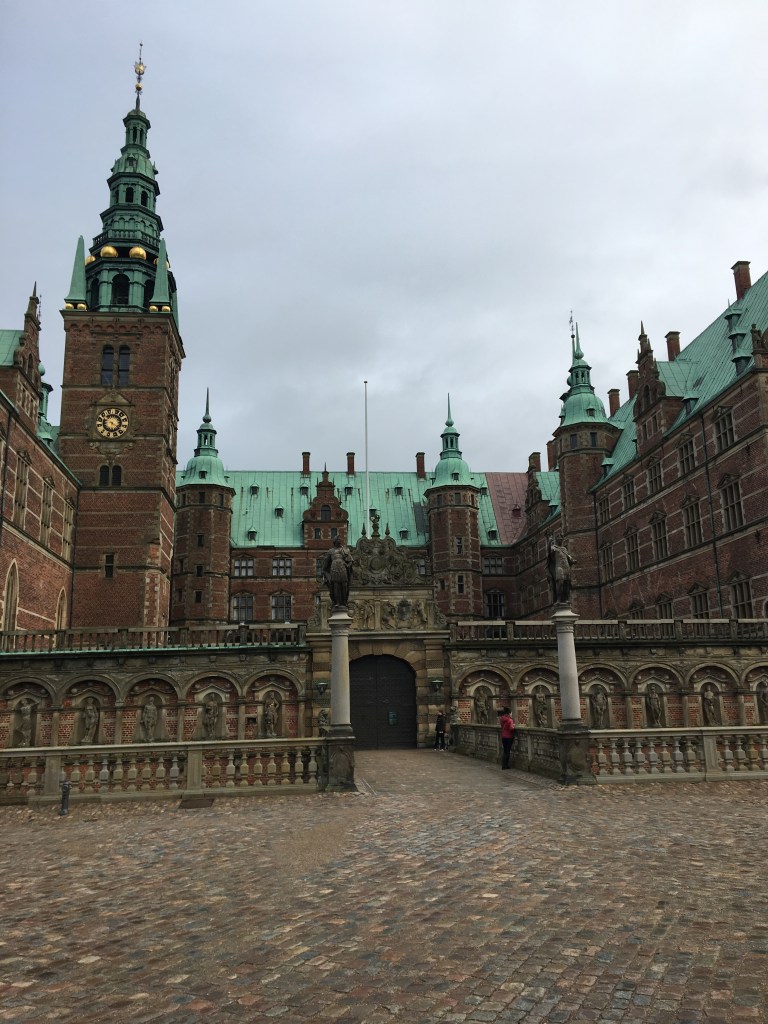
If you have time, take a 40-minute train journey to stunning Frederiksborg Castle which sits on an island on a lake in the town of Hillerød. If you have a Copenhagen Card rail travel is free, and this is definitely a trip worth taking. You need to allow at least half a day for a walk round the castle and its lovely gardens across the lake, and especially if you visit in summer.
Frederiksborg has housed The Museum of National History since 1878, when it was established by brewer JC Jacobsen, the founder of Carlsberg. The beautifully decorated rooms are home to portraits, historical paintings, furniture and amazing decorative art which takes visitors on a journey through Danish history and culture from the late Middle Ages to the present. The portrait collection is the largest and most significant in the country.
One of the highlights of Frederiksborg is the Castle Church, a magnificent and impressive structure planned and built as the private church of the Royal Family. Christian the 4th spared no expense in its construction in 1606-17 bringing skilled craftsmen from all over Europe.
When large parts of the Castle burned down in a disastrous fire in 1859 the church, which forms the west wing, largely escaped, which is why the authentic interior can be seen to this day. Today the castle church serves as a parish church and is open in connection with services, christenings, confirmations and weddings.
Another famous fortress you should not miss is Kronborg Castle at Helsingør, an hour’s train journey from Copenhagen. The castle sits facing Sweden at the narrowest point of the Oresund Sound which divides the two countries.
Kronborg is the actual castle where Shakespeare set his famous play, Hamlet, but whether or not he ever actually visited Kronborg remains a mystery. In Hamlet, Shakespeare called Kronborg Castle, Elsinore, thus Elsinore has become the English name for Helsingør, the town where Kronborg is situated.
It was once one of the most important towns in Europe and ships passing into the Baltic Sea paid tolls at Kronborg Castle which incidentally became a UNESCO World Heritage Site in 2000.
Other attractions north of Copenhagen also on the coast are the Deer Park at Klampenborg which has miles and miles of beautiful walks, and of course the chance to see thousands of wild deer. You can ride on horse-drawn carriages through the woods and visit the oldest amusement park in the world, Bakken.
Founded way back in 1583, Bakken has been a firm favourite with the people of Copenhagen for centuries. During summertime, families, young couples and seniors alike flock to the amusement park and the surrounding woodland to relax and have a good old fashioned day out. Bakken (summer only) offers a great blend of children’ amusements, restaurants, pubs and bars with entertainment and live music.
While you’re at Klampenborg, it is only a short distance further north – on the way along the coast to Elsinore – to visit the home of the renowned Danish authoress Karen Blixen, who wrote the book ‘Out of Arica’, made into a successful film starring Robert Redford and Meryl Streep. Now the Karen Blixen Museum, her birthplace and last resting place at Rungsted where she did a lot of her writing after returning from Kenya, is a popular attraction. But like the Deerpark, Karen Blixen’s house, museum and gardens are best left to a summer visit.
FACTBOX AND TOURIST INFO
RYANAIR may have its critics, but I am not one of them. I have only ever experienced one short delay; never ever had a bag damaged or misplaced, and paying just £159 (about 190 Euro) for return flights to Copenhagen from Dublin, including a checked in bag compared to almost double that with other carries, was a no-brainer. The only downside was a long walk from the aircraft, especially in Copenhagen, so take this into consideration of you have any mobility issues.
Copenhagen Visitor Service, Vesterbrogade 4, 1620 Copenhagen V.
Tel: + 45 70 222 442.
Fax: + 45 70 222 452
Email: visitorservice@kk.dk
Web: visitcopenhagen.com
Also: Wonderful Copenhagen, Nørregade 7B, 1165 Copenhagen K, Tel: + 45 3325 7400