DESTINATIONS: UKRAINE AND LITHUANIA
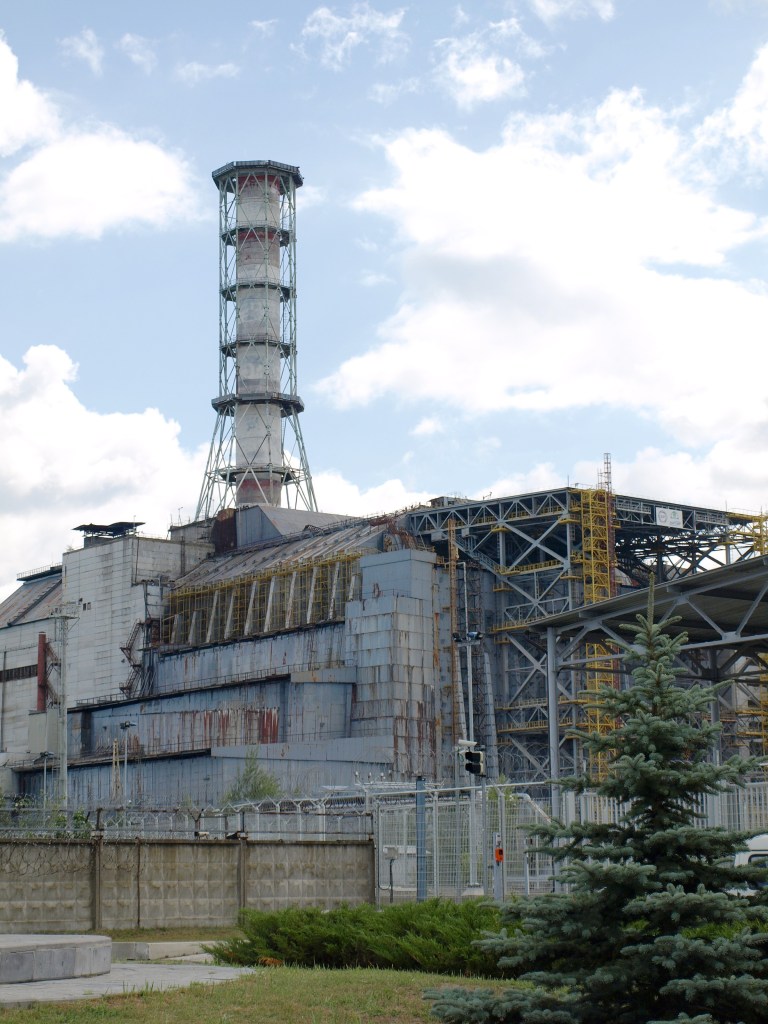
NUCLEAR tourism is booming both in Ukraine and Lithuania – thanks to the recent success of the HBO mini-series Chernobyl. (at least it was before the start of the war in Ukraine).
The Chernobyl plant is just 80 miles from Ukraine capital Kiev – available pre-war by direct Ryanair flights from Dublin – while Ignalina, on Lithuania’s border with Latvia, is a sister plant of Chernobyl and was in fact used as its screen ‘double’ for the series. Wizz Air operates daily services to Vilnius, the Lithuanian capital which is about two hours by road from Ignalina.
Day tours to Chernobyl from Kiev have in fact been operating for the past number of years, and are are approved by the Ukrainian government. However, since the TV series three months ago there has been a more than 50 per cent increase in visitors and inquiries to the handful of operators who offer this rather unusual tourism experience.
The area round Chernobyl retains the feel of a post-apocalyptic wasteland, where wild animals roam and vegetation encroaches into windowless, abandoned buildings strewn with rubble.
In Pripyat, the ghost town once home to 50,000 people who worked at the plant, an amusement park houses a rusting half of a merry-go-round and dodgem car track, and a giant Ferris wheel that never went into operation.
It’s the image of the Ferris wheel which is one of the most iconic images captured by Chernobyl day trippers.
However, in spite of the influx of tourists flocking to the site, questions remain as to the safety of the area given the magnitude of the radioactive material which remains and the fact that its effects are expected to last a millennium.
One guide Viktoria Brozhko told Reuters: “During the entire visit to the Chernobyl exclusion zone, you get around two microsieverts, which is equal tot he amount of radiation you’d get staying at home for 24 hours.”
However, other reports suggest that Pripyat ”will not be habitable for another 20,000 years.” In any event, visitors to the site are instructed not to sit down, and are checked for radioactive particles before leaving.
Yaroslav Yemeilianeko, Director of Chernobyl Tour, speaking before the start of the war, said his company is experiencing an increase of up to 40 per cent in visitors because of the TV series. It offers a special tour of locations depicted in the series, including the bunker where the initial decision by local officials not to evacuate after the explosion was made.
Day trippers board buses in the centre of Kiev and are driven 75 miles to the area, where they can see monuments to the victims and abandoned villages, and opt to have lunch in the only restaurant in the town of Chernobyl. They are then taken to see reactor number four which since 2017 has been covered by a vast metal dome 344 ft high which envelops the exploded core. The day finishes with a walk around the town of Pripyat which was totally evacuated in the days following the disaster.
The Soviet government reported that 31 people were killed immediately after the tragedy, and sought to keep the true extent and seriousness of the disaster secret, even delaying evacuation of people from the immediate area, a fact so vividly portrayed in the TV series.
However, studies since the explosion estimates the total death toll from Chernobyl to be as high as 115,000, mainly affecting Ukraine and adjoining Belarus. But it could have been far, far worse if the fire had not been prevented from spreading to the other three reactors, with the death toll instead counted in millions.
Radio active fall-out was detected soon after the disaster in Scandinavia, while movement of sheep was restricted as close to home as in the Welsh hills…
TAKE A DAY TRIP TO IGNALINA, LITHUANIA’S NUCLEAR PLANT, WHERE MUCH OF THE CHERNOBYL TV MINI SERIES WAS FILMED…
MOST of the action scenes in the acclaimed HBO series Chernobyl were in fact filmed in Lithuania, near the town of Visaginas on the border with Latvia, at the Ignalina Nuclear Power Plant (INPP).
The show’s production team sought a realistic representation of the original Ukrainian power plant and found INPP was built in the same era, making it the perfect on-screen double for the Chernobyl site.
Indeed, fans of the TV series can now get closer to the action, with exclusive tours and site visits to Ignalina, a sister plant of Chernobyl, which is currently in the process of being closed down and decommissioned which could take another 20 years. Indeed, the Ignalina Nuclear Power Plant will not be fully dismantled until 2038.
The Ignalina plant, located 90 miles from Lithuania’s capital Vilnius, offers popular excursions to its controlled INPP zone, home to the plant’s reactor room, turbine room, and block control panel. These excursions need to be booked up to two months in advance and last two and a half hours, taking place on weekdays for groups not exceeding 15 people.
Although in the process of being closed down, the power plant is still active and currently employs about 2,000 people, about a third of the number that were employed when the reactors were operation (the first block of the INPP was decommissioned in 2004), the second – in 2009). During excursions, current employees are quite happy to chat about their life and work in Visaginas.
Almost 100,000 visitors from around the world have visited the plant since the opening of the information centre of the Ignalina Nuclear Power Plant in 1995.
Located in the town of Visaginas, several kilometres away from INPP, is the operating simulator of the INPP block control panel. Set up when the power plant was being built, the simulator has been used for training employees and exploring solutions to emergency situations. During excursions, visitors have the chance to see how the power plant control simulator in operation. Incidentally, this simulator served as a model for the Chernobyl creative team.
Visaginas, known in Lithuania as “the nuclear town”, was build specially in 1975 to accommodate the employees of the Ignalina Nuclear Power Plant, but its days were numbered when Lithuanian joined the European Union in 2004 and the EU promptly insisted on the closure of Ignalina, in fact providing financial and technical support for the plant to be closed down safely.

 The 'Travel' Life of Brian