BY BRIAN OGLE
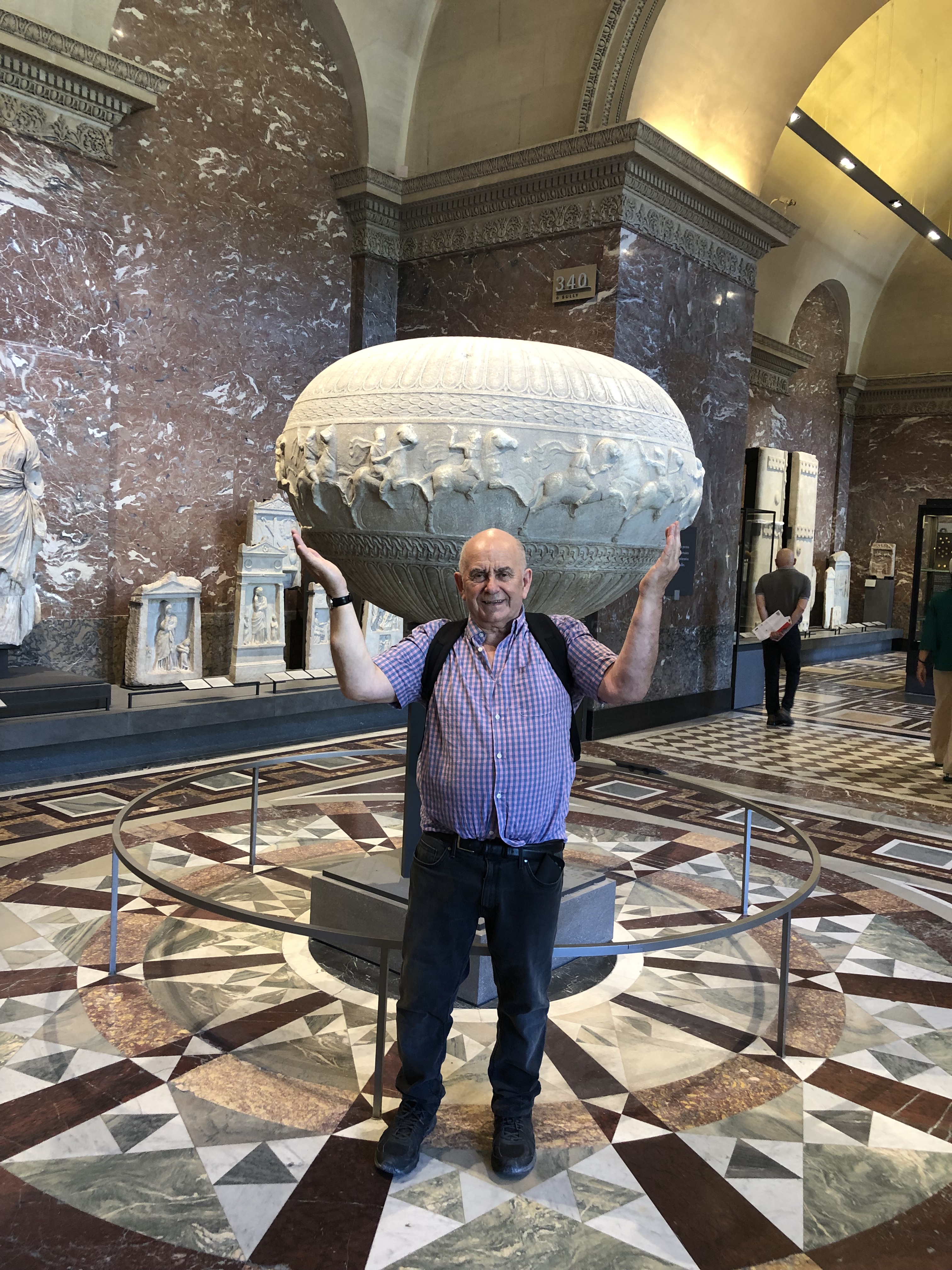
THE problem with Paris is that once you’re there for a couple of days, you don’t want to leave.
Apart from a couple of day trips to international sports events, I hadn’t been to the city for for more than 30 years… until recently.
I was a little bit wary of running into yellow vest protests, expecting the city to be more on edge following a series of terror attacks in recent years, not to mention the usual French industrial dispute thrown in… but hey, it was just like the Paris I had visited all those years ago.
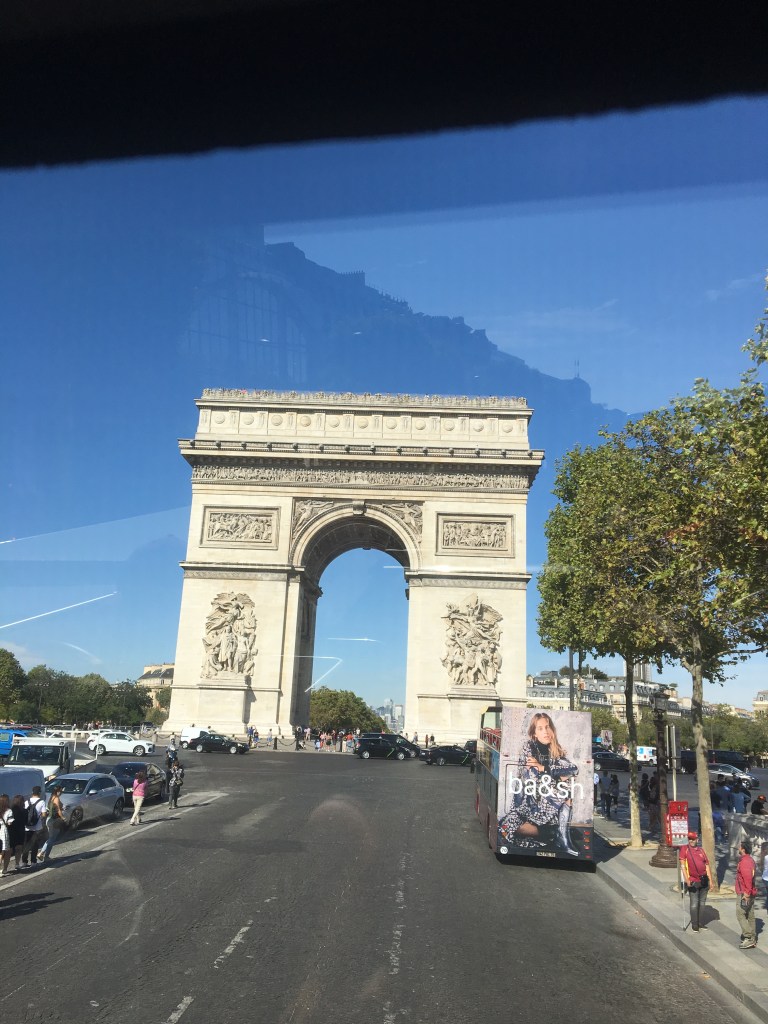
Apart from a far more visible gun toting police presence and clatter of gendarme carriers on standby in side streets off the Champs Elysses it was still in my view the world’s number one tourist city, perhaps bar London. And the atmosphere was just like I remembered it all those years ago.
The cafe culture was thriving, the traffic was as crazy as ever with a dozen lanes feeding a dozen or more boulevards round the l’Arc de Triomphe, the waiters were as entertaining and sometimes as rude as ever – if you didn’t try to order in French – and the traditional sights were très, très magnifique in the 25 degree September heat.
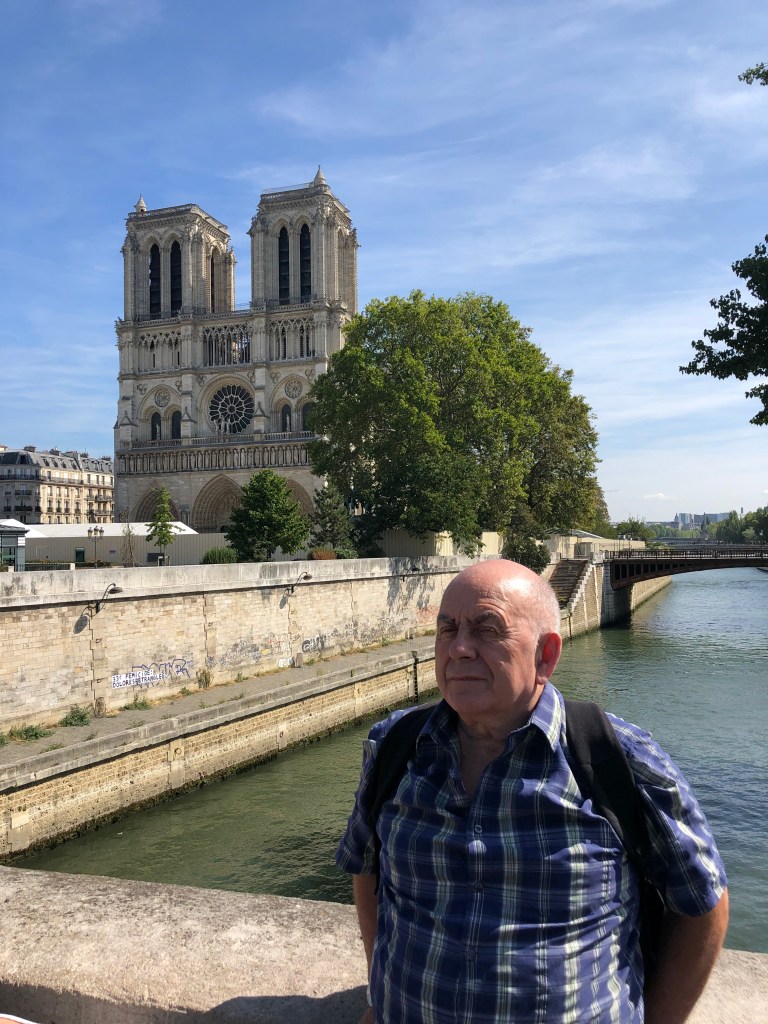
Only the blackened and scaffold-cloaked sad old lady of Notre Dame on the Île de la Cité cast a cloud over the capital which was blue skies and sunshine from start to finish. Tourists lined the banks of the Seine many of them choking back tears as they tried to take in the state of one of the city, and the world’s, most iconic cathedrals, after the summer inferno.
Like most European cities, you now need to have deep pockets for a week’s stay in the French capital, especially with the pound at almost parity with sterling, thanks to the seemingly unending Brexit fiasco.
But if you go for the Plat du Jour, or the special two or three-course menu most restaurants have on offer at lunchtime and have your main meal during the middle of the day, and take advantage of some of the many ‘card’ offers for sightseeing and public transport, you can cut your cloth to suit.
In Paris, accommodation of acceptable quality and at a decent price can be a problem most times of the year.
And even more so in September this year when the city was enjoying an Indian summer like much of the UK and the rest of Europe.
Late summer is traditionally one of the busiest times for visitors, and Paris is often bursting at the gills, with the tourist influx boosted by the many thousands of Parisiennes who return home to their city addresses after spending much of July and August down on the Med or along the West coast.
Good standard hotel accommodation close to the centre is always expensive in one of Europe’s most visited capitals and frankly out of many people’s price range, ours included, especially when you are looking at an eight-night stay.
So we decided to opt for the suburb of Clichy and take the Metro (line 13) into the centre and then connect with the various other Metro and rail routes to reach the tourist hotspots like the Louvre, Eiffel Tower, l’Arc de Triomphe, the various museums, and other major attractions. It was just a 15-minute trip to the centre – about seven or eight stops – and the Mairie de Clichy Metro station was less than 100 yards from our accommodation, Appart’City Paris Clichy-Marie.
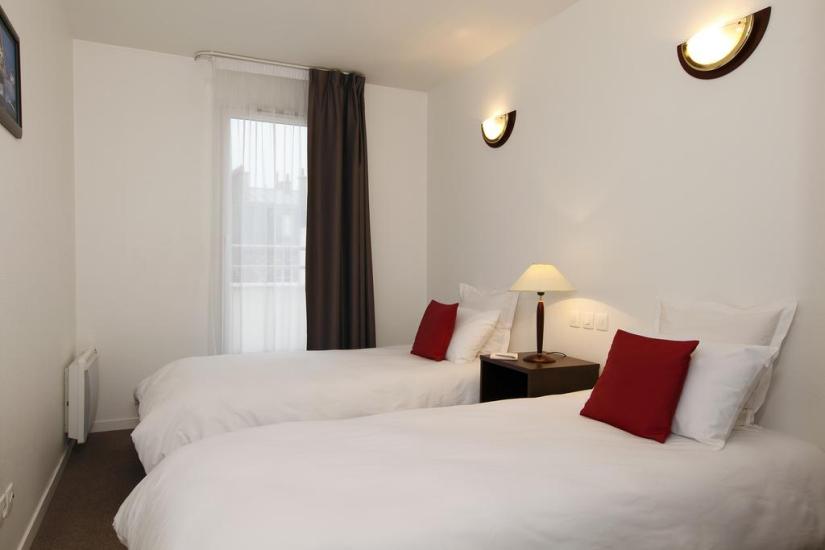
The two-bed studio came complete with cooker, fridge, safe, etc, in fact everything you might expect of a 3 star hotel room including a clean modern, bathroom with bath and shower options.
At just £728 for eight nights, it was probably half the price you would pay for a similar more conventional hotel room closer to the centre.
The studio is serviced just twice a week, but as we were rarely in the room this didn’t matter that much. However, one concern was the fact that we stashed a lot of French cheese in the fridge on day one, only to notice two days later that it wasn’t working and we had lost the lot, thanks to the 25 degree heat.
We didn’t make an issue of it, but the fridge wasn’t repaired until the fourth day of our stay and there was no offer to reimburse us for the cost of the lost cheese, which came to almost 20 Euro.
Another negative was the traffic noise during the night, especially motor bikes, of which Paris has more than its fair share. In Amsterdam it’s push-bikes, in Paris in noisy, over-revving and erratic motorcyclists, weaving all over the place and vying with each other to hug the slipstream of cars and buses.
The breakfast room at Appart’City behind reception was fine for freshly baked croissants/baguettes and coffee of our petit déjuner, (which cost 8.50 Euro), and most mornings we didn’t hang around for long, hi-tailing it off to the Metro as soon as possible, to make the most of our time and get the best value of our four-day Museum pass.
Between the hotel and the Metro is a fairly large supermarket which turned out to be very handy for staples like coffee, cereals and bread and for a late night restocking after a hard day traipsing the streets trying to cover as many of the sights as possible.
We booked Appart’City Paris Clichy-Marie, 4 Rue Palloy, 92100 Clichy, on Booking.com paying an extra 12 Euro for early check-in and a 1 Euro per night per person tourist levy on arrival.
It wasn’t a bad cost-effective option, and with the Metro just three minutes walk away, has excellent connections to the city centre (15 mins) and Montmartre – 10 minutes away.
Paris is a mecca for movie buffs. You stumble across key locations for some of the world’s great, and not so well known, movies at every turn.
I actually discovered one of them myself, when I stopped for a coffee in a Montmartre bar 100 yards up the hill towards Sacre Coeur. Something should have rung a bell in my brain when I noticed a drink on the menu called an Amélie Mohito.
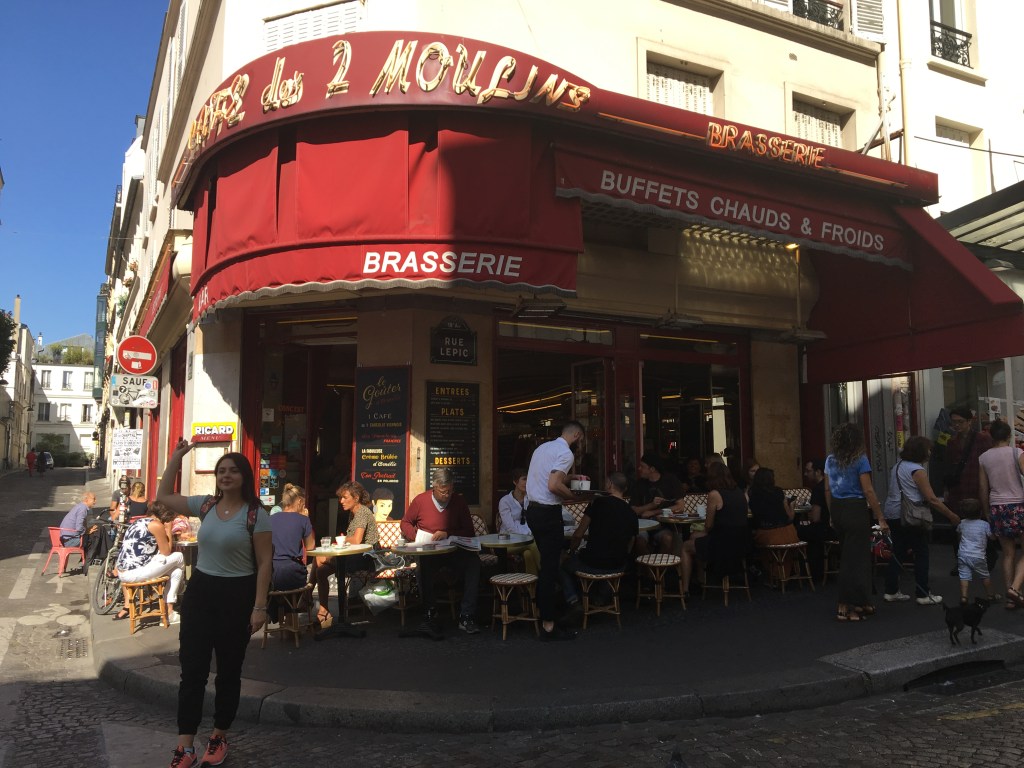
I decided to try one, but it was only when I noticed hordes of camera clicking tourists diving in and out of the bar taking pictures of the bar staff, other customers and even yours truly sitting quietly with his drink, that I asked one of the barmen what was going on….
“Ne sais-tu pas”, this is the bar where Amelie worked as a waitress, he explained. Then I noticed the mirror, in fact one of several, with Audrey Tartou as Amélie smiling at customers.
The Deaux Moulins (Two Windmills) was in fact the bar where the heroine of the film, Amélie worked as a waitress, and it of course played a huge part in the film which tells the story of a young woman who discretely orchestrates the lives of the people around her, creating a world exclusively of her own making. It was shot in more than 80 Paris locations and with Amélie’s workplace featuring strongly; the bar is easily recognisable to the film’s many fans, excluding of course the writer.
Montmartre is of course one of the most interesting, vibrant and exciting areas of Paris. It is characterised by the white dome of Sacre Coeur on the hill and the ageing but still iconic Moulin Rouge revue bar, still packed to the rafters every evening with tourists. Streets are crammed full of restaurants, bars, coffee shops, intriguing little boutiques, souvenir shops, dozens of art studios and exhibitions.
It may be hugely over priced and touristy, but the Moulin Rouge stage show has Las Vegas-style glitter, incredible costumes, and amazing energetic dance routines, and is definitely worth doing once – just to say you have been there and seen the famous can-can dancers which so besotted the artist Toulouse-Lautrec.
Near the end of the 19th century and at the beginning of the twentieth, during the Belle Époque, many artists lived in, had studios, or worked in or around Montmartre, including Monet, Renoir, Degas, Toulouse-Lautrec, and Picasso. Van Gogh lived on Boulevard de Clichy, a street on the edge of Montmartre, along with with his brother Theo.
An interesting but somewhat quirky place to visit is Montmartre Cemetery which is on the site of an old gypsum quarry and is the last resting place to many of the artists who made their home “on the hill”.
If Art is your thing then Paris will be your type of city. My favourite was the Musée d’Orsay on the Left Bank of the Seine. The collections are housed in the former Gare d’Orsay, a old railway station built in the late 1800’s. The museum holds mainly French impressionist art dating from 1848 to 1914, including paintings, sculptures, furniture, and photography.
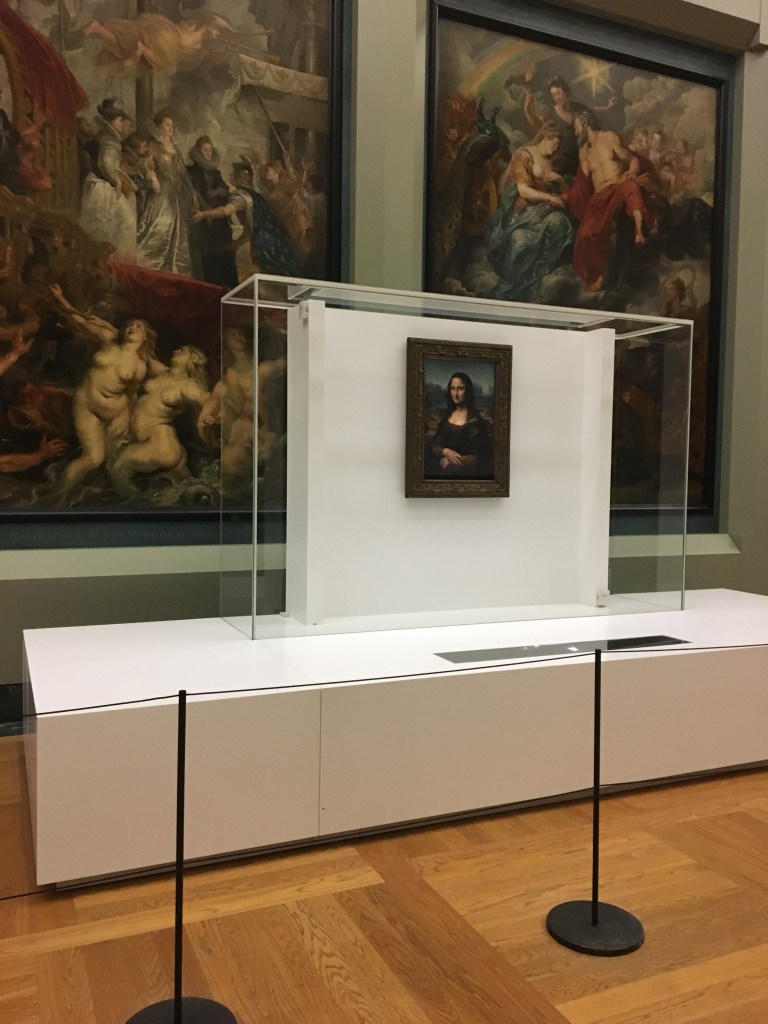
No one can afford to miss a visit to the world famous Louvre, but be warned, don’t just turn up not the day and expect to walk in. Go online and book a slot for your visit at least a week in advance in peak season, and if you want to see its most famous exhibit, the Mona Lisa, then prepare to be disappointed.
Once you get in there’s still a long snaking queue and an army of guides to make sure you just about get a quick peek and a chance to take a hasty selfie in front of Da Vinci’s famous portrait that has been described as “the best known, the most visited, the most written about, the most sung about, the most parodied work of art in the world.” For me it was bit of a letdown, catching little more than a fleeting glance as I fought for elbow room to catch that mysterious smile still several metres away.
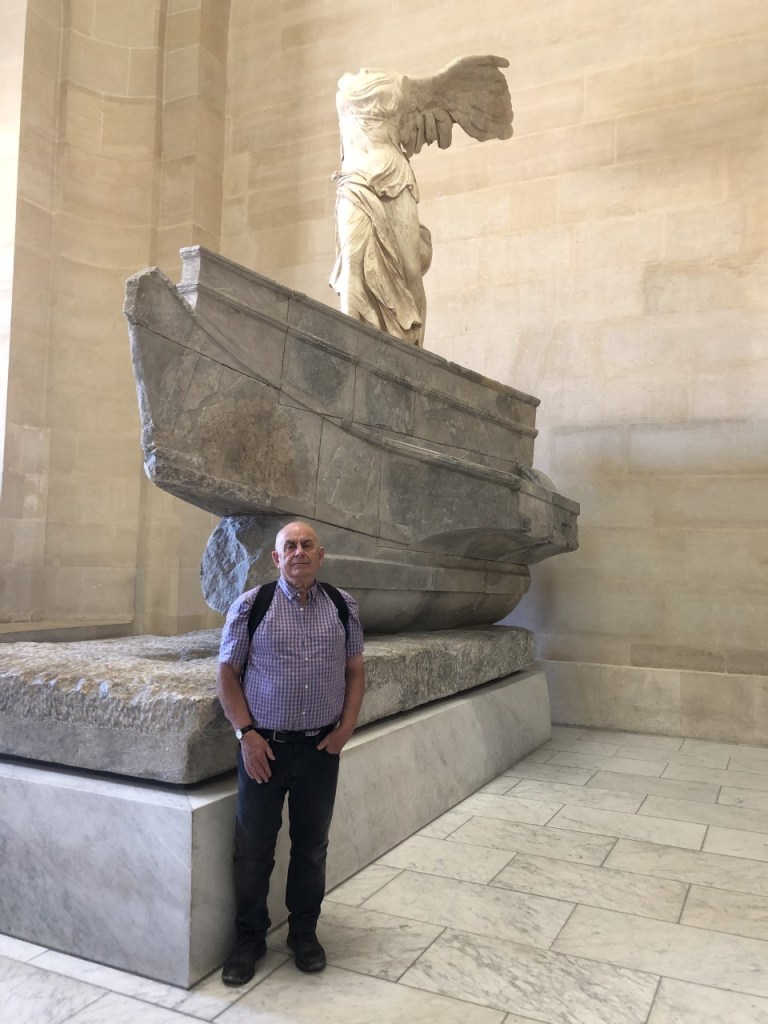
Someone recommended we book a second visit when the crowds were thinner, at 9.00pm in the evening, but guess what… there was just as many people there then and the museum staff were just as overbearing. Frankly there were many more exhibits in The Louvre which were just as sought after, such as The Venus De Milo and indeed the distinctive Winged Victory of Samothrace marble statue from the Hellenic 2nd Century, but hey, you can’t visit The Louvre and miss Da Vinci’s masterpiece…
Always curious to see inside great buildings, the Greek Temple-style structure of L’Eglise de la Madeleine beckoned us for a further look. It’s a huge Roman Catholic church occupying a commanding position in the 8th Arrondissement and designed in its present form as a temple to the glory of Napoleon’s army.
We weren’t sure if it was a church or a museum from the outside but once through the doors it was obvious that a service of some kind was taking place. We slipped in quietly and sat down at the back to listen, only to be surprised by a beautiful soprano voice singing something in French to the very distinctive tune of the Animals’ House of the Rising Sun.
That was surprising enough, but this was followed up by a middle aged rocker in leathers delivering some sort of homily, then a priest leading prayers followed by a huge bouquet of flowers being laid at the altar. However, all was revealed on the way out when we learnt it was a memorial service for one of Paris’s favourite sons, the rocker Johnny Halliday (France’s Elvis), who passed on a couple of years ago.
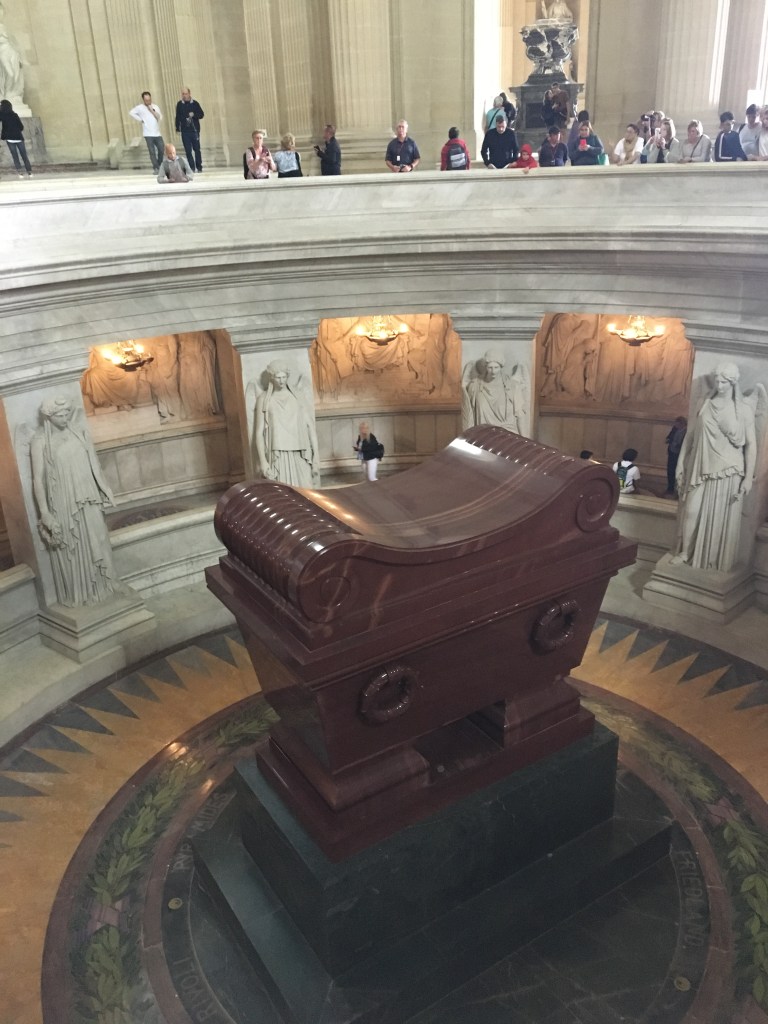
There are so many great buildings and sights to see in Paris it is impossible to visit all of them, albeit in an extended city break like ours, but if you have to make a judgement include the ones I have mentioned, but add in too the Tomb of Napoleon at Invalides, The sensational ornate Paris Opera, the Eiffel Tower and for one of the best views of Paris, climb to the top of the winding stone staircase on the l’Arc de Triomphe.
Eight days in Paris is expensive, hectic, exhausting, but one of the best city breaks you could ever have…
As we took the train from the Gare du Nord back to Charles de Gaulle and flights back home, I swear we were both humming ‘Non, Je Ne Regrette Rien….’
DON’T MISS VERSAILLES – AND THE GARDENS!
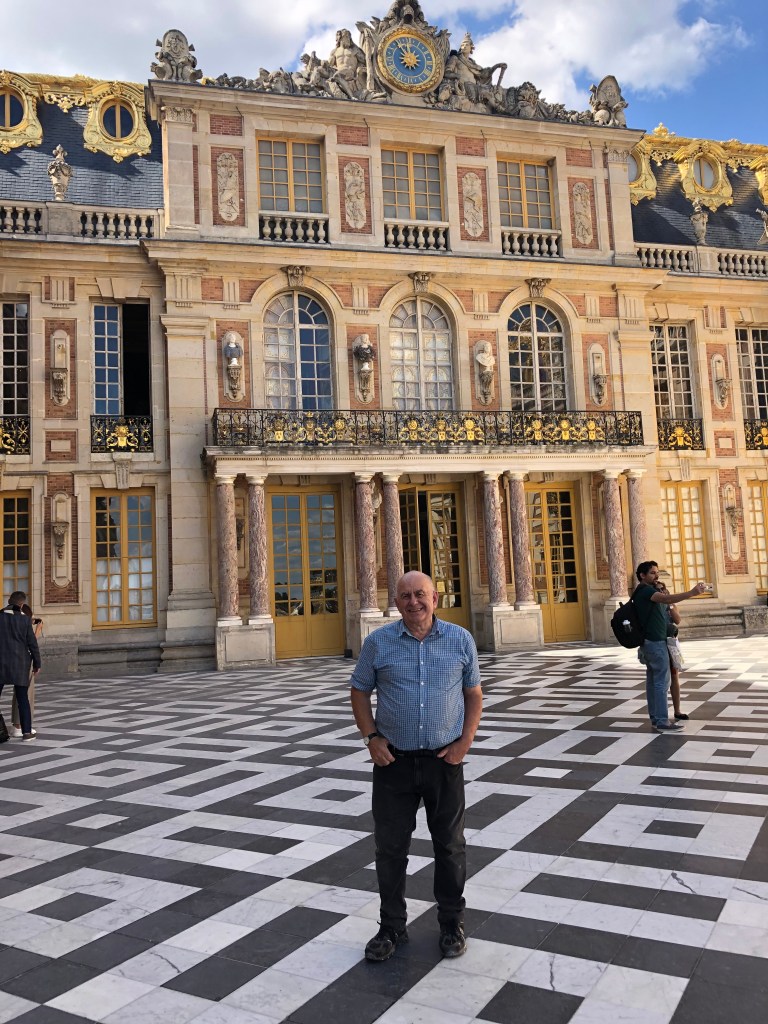
AN excellent day trip away from Paris city centre, and one that is high on the must do list of many tourists, is to the home of the French aristocracy, at Versailles – the principal royal residence of France from 1682 until the French Revolution in 1789.
Our Paris PassLib’ pass did not cover the train journey, (just the admission to the palace and gardens), as it was outside the central Paris transport zones, but it was just half an hour and a 10 Euro per person return trip to this phenomenally popular UNESCO World Heritage site.
The Palace of Versailles is especially notable for its Hall of Mirrors, the Royal Opera and the various royal apartments and residences, including those created for the use of Marie Antoinette, while the surrounding gardens are simply out of this world. In 2017 Versailles received 7.7m visitors, making it the second-most visited monument in the Ile-de-France region, just behind the Louvre and ahead of the Eiffel Tower.
The attraction is not just the Palace of course, but the magnificent 800 hectares of gardens, waterways, ponds and fountains which are simply mind boggling. We did our best to see what we could in the half-day or so we had, but it was woefully inadequate.
The Gardens occupy part of what was once the royal demesne of the chateau of Versailles and much of it is landscaped in the classic French formal garden style. In addition to the meticulous manicured lawns, shrubbery and sculptures, are the many fountains at various parts of the gardens.
Dating from the time of Louis XIV the fountains contribute to making the gardens of Versailles unique. On weekends from late spring to early autumn, the administration of the museum sponsors the Grandes Eaux – spectacular shows during which all the fountains in the gardens are in operation. Versailles is also course associated with Marie Antoinette, who spent a lot of her time there with closest relatives and friends.
The queues for the Palace often involve waits of several hours, usually in the mornings, but we took the tip of a helpful official who suggested we skip the lines waiting for entry and ‘do’ the gardens first, returning to the palace after about 2.30pm.
The only problem is four hours wasn’t nearly enough to see and appreciate the gardens, and the next time we would definitely hire one of the motorised golf-type buggies to get around and see more of this truly spectacular tourist phenomenon.
PARIS INFO
We opted for a five-day Paris PassLib’ which cost 165 Euro per person for Adults (95 Euro for Youth, 12 to 25 years). Two and three-day options are available. The package includes the Paris PassLib’ card which includes a one hour boat cruise on the Seine, a one day sightseeing hop-on hop-off bus tour and ‘Access Museums of the City of Paris’. It also includes the Paris Visite card for five five days giving free public transport on Metro, RER rail, tram and bus in the main central zones of the city and an optional extra of access to the 2nd Floor of the Eiffel Tower. It also includes a Paris Museum Pass for 96 hours (four days) which gave us entry to the permanent collections and some temporary exhibitions of more than 50 museums in Paris and the Paris region including: the Louvre, the Versailles Estate, the Panthéon, the Towers of Notre-Dame, the Arc de Triomphe and the Tomb of Napoléon I. During the Musical Fountains Shows at Versailles, the Musical Gardens, shows, and wooded areas of the Château of Versailles are not accessible to Paris Museum Pass holders. To visit the gardens during this period, you need to buy a supplement on the website of the Palace of Versailles or on-site at the ticket office.
Book your Paris PassLib’at parisinfo.com, the official website of Paris Convention and Visitors Bureau.

 The 'Travel' Life of Brian