‘Travel Life of Brian’ writer BRIAN OGLE recalls his first visit to the Lithuanian capital, a few years after the country declared independence from the Soviet Union
WITH Vilnius the capital of Lithuania being judged best for value in the Post Office Travel Money’s annual ‘City Costs Barometer’, it’s a good time to take a closer look at the capital city of the country which was the first of the Soviet Republics to declare independence from the Soviet Union in 1990.
Lithuania was also the first of the newly independent former Soviet countries which I visited way back in 1995, when it was a fledgling democracy, feeling its way in the world and building up relations with its neighbours – also now independent states – and the West.
I remember a feeling of excitement tinged with curiosity on the flight from Stockholm, a trip I had decided to make almost as a last minute add-on to a city break in the Swedish capital. I had been to Sweden many times, but the prospect of being so close to one of the newly independent Baltic states was too much of a temptation to resist. I remember it was just over an hour’s SAS flight over the Baltic Sea, and thinking why not….? It will be somewhere completely different.
Hardly surprisingly, there’s wasn’t much tourist traffic into Vilnius or Lithuania in those days, most of my fellow travellers on the flight appeared to be businessmen or women, anxious to gain a foothold in a new emerging untapped market.
My first impressions of Vilnius were mixed. The Soviet-era airport terminal I remember was exactly that, a relic of Soviet times, and thankfully it has now been completely transformed and modernised with even more improvements on the way in the next couple of years.
Apart from typically Soviet-looking apartment blocks on the outskirts of Vilnius the first thing that caught my eye as I entered the city was the proliferation of trolley buses, not the double deckers which were once the work horses of booming Belfast in its shipyard days, but very elderly and almost decrepid single deck outfits, obviously with many, many thousands of kilometres and years on the clock.
Today the trolley buses are still there, almost 200 of them on the streets of Vilnius, but thankfully they are now a lot more modern, and undoubtedly more reliable; but they are still the backbone of the city’s transport system. However, diesel powered buses and minibuses (called marshrutkas in many ex-Soviet states) share the burden of getting people in and out to their workplaces, and increasingly ferry tourists to the various city sights and of course to and from their hotel accommodation.
Public transport is free if you have a Vilnius City Card (sold in tourist information centres), while minibuses shadow most bus routes. They pick up/drop off passengers anywhere en route (not just at official bus stops) and can be flagged down on the street.
While the old Soviet-era trolley buses initially captured my attention, very soon I was wandering around cobblestone streets on foot in what is one of the largest surviving medieval old towns in Northern Europe. It has an area of almost 900 acres and takes in almost 1,500 buildings.
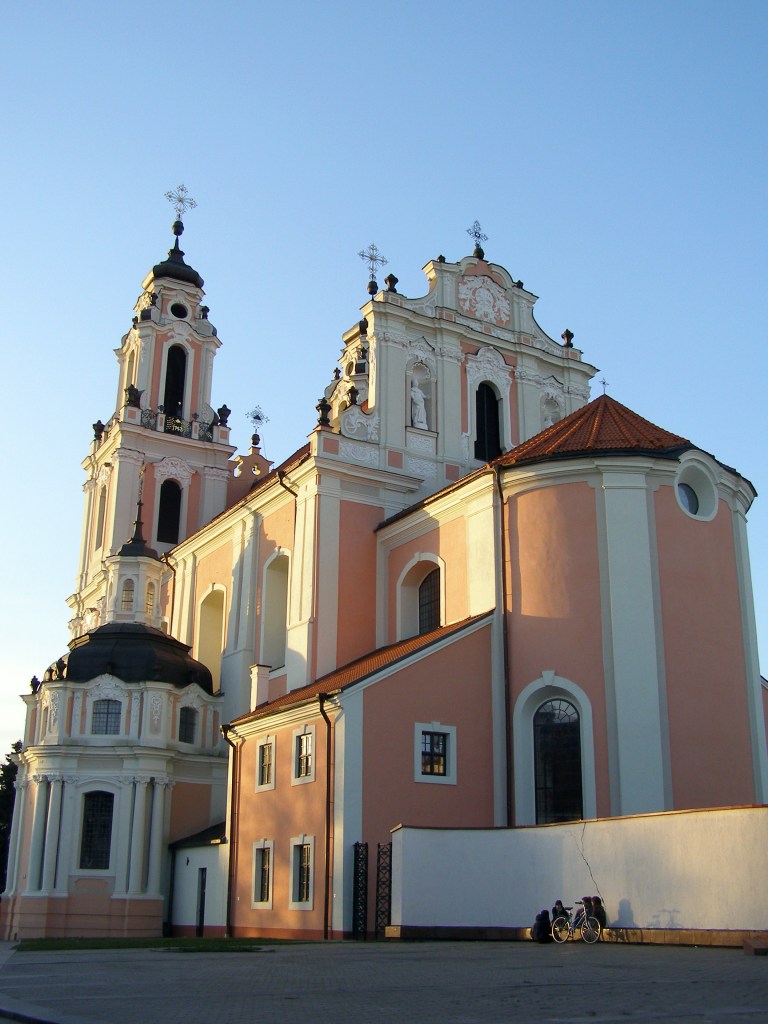
The ‘antique’ part of Vilnius, the Old Town has developed over the course of many centuries, and has been shaped by the city’s history and a constantly changing cultural influence. It is a place where some of Europe’s greatest architectural styles – gothic, renaissance, baroque and neoclassical – stand side by side and complement each other.
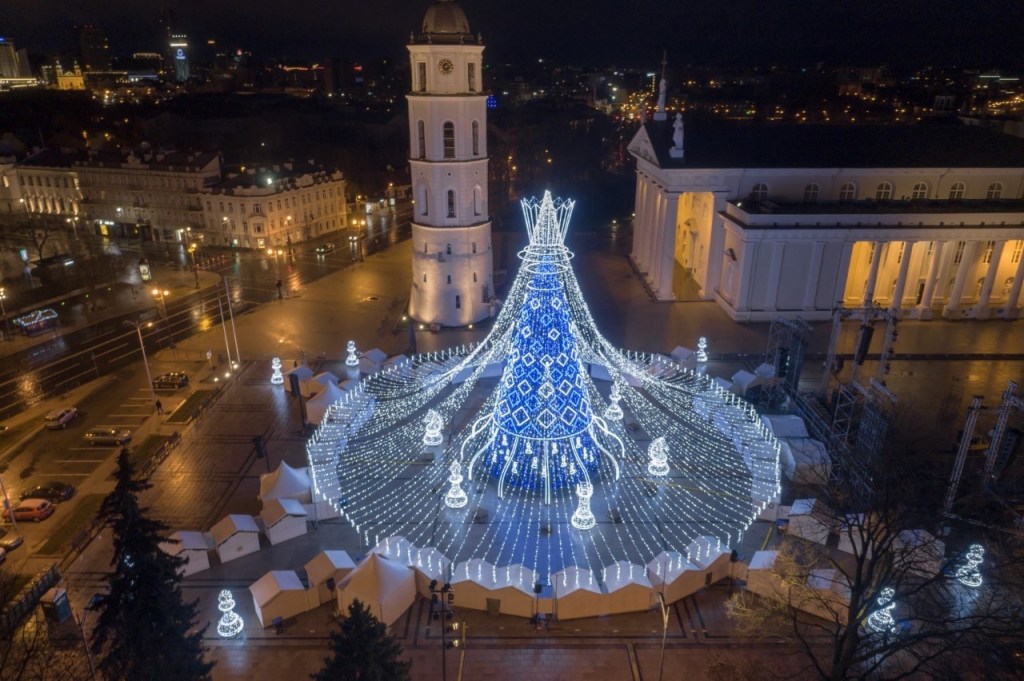
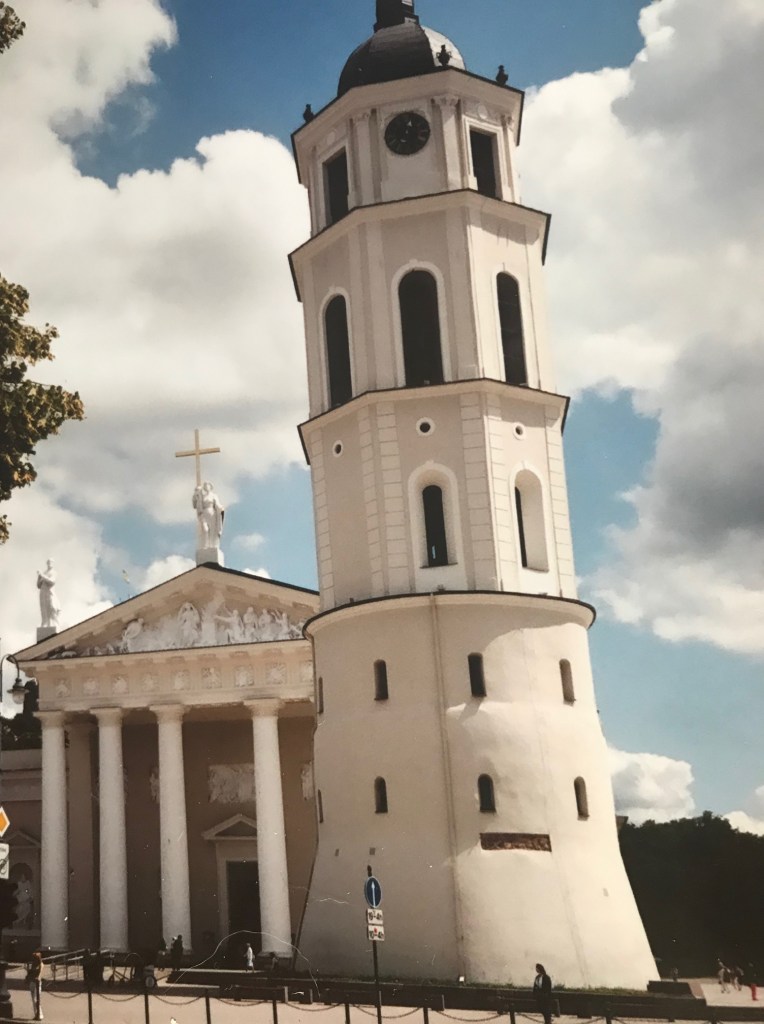
Vilnius is renowned for its beautiful churches and university buildings especially, while Pilies Street, (where I stayed on my first visit there), is the Old Town’s main artery and a hub of cafe and street market life. The main street, Gediminas Avenue, is partially located in the Old Town while the central squares in the Old Town are the Cathedral Square and the Town Hall Square.
One of the most elaborate architectural complexes is the Vilnius University Architectural Ensemble, which occupies a large part of the Old Town and has 13 courtyards. In 1994 the Vilnius Old Town was included in the UNESCO World Heritage List in recognition of its universal value, attractiveness and originality.
At the time of my first visit, currency was the Lita, but now Lithuania like the other Baltic states, has become a bit pricier with the adoption of the Euro, surprise surprise… But as the Post Office Money Barometer shows, it is still a very good value short break destination.
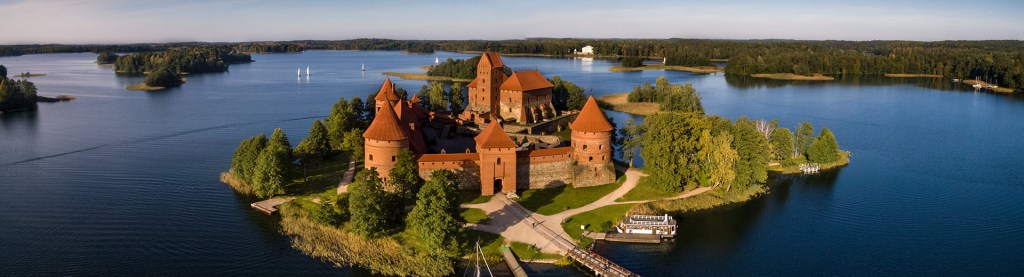
Vilnius centre is a good walking city, but outside of the capital there are a couple of very interesting day trips. The first is to Trakai a town 30 kms or so west of Vilnius. Part of the Trakai Historical National Park, Trakai Island Castle is a 14th-century fortress in the middle of Lake Galvė. Once a home to Lithuania’s grand dukes, it now houses the Trakai History Museum, with archaeological objects, coins and crafts, and is an absolutely brilliant day trip. I have been there in temperatures of minus 15 and plus 30 and can testify that it is worth a visit at any time of the year.
Living near the castle are members of the Karaim ethnic group, descendants from Turkish-speaking families that came to Lithuania from Crimea. At first there were a few hundred Karaim families living in Trakai, now there’re about 250 people living in the country altogether, mostly in the area around Vilnius and Trakai. Some them live close to the castle and visitors can experience Karaim cuisine and their way of life.
Trakai would be my first choice of a day trip from Vilnius, but a close second would be a visit to the town of Visaginas on the border with Latvia. It’s the site of the Ignalina nuclear power plant which was used as a ‘body double’ for Chernobyl in the award-winning HBO TV series. It’s about two and a half hours from Vilnius and you can book day tours to the plant which is in the process of being closed down, (it will take until 2035 to do this safely) but you can book day tours to what is actually a sister plant of Chernobyl in northern Ukraine where the disaster took place.
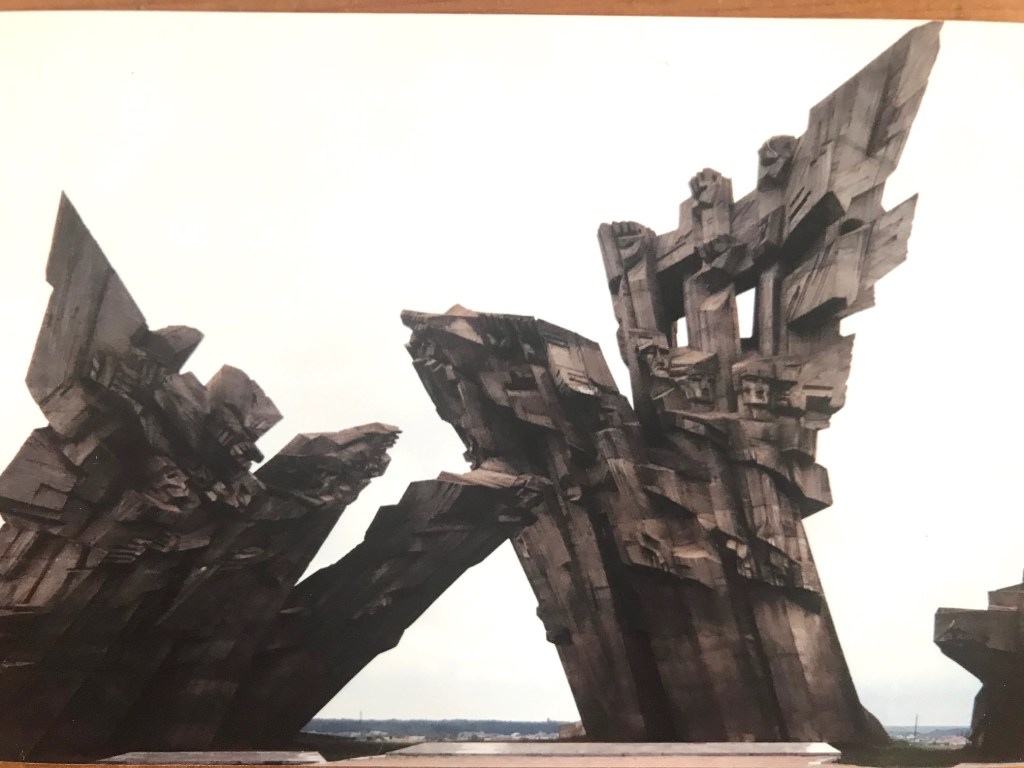
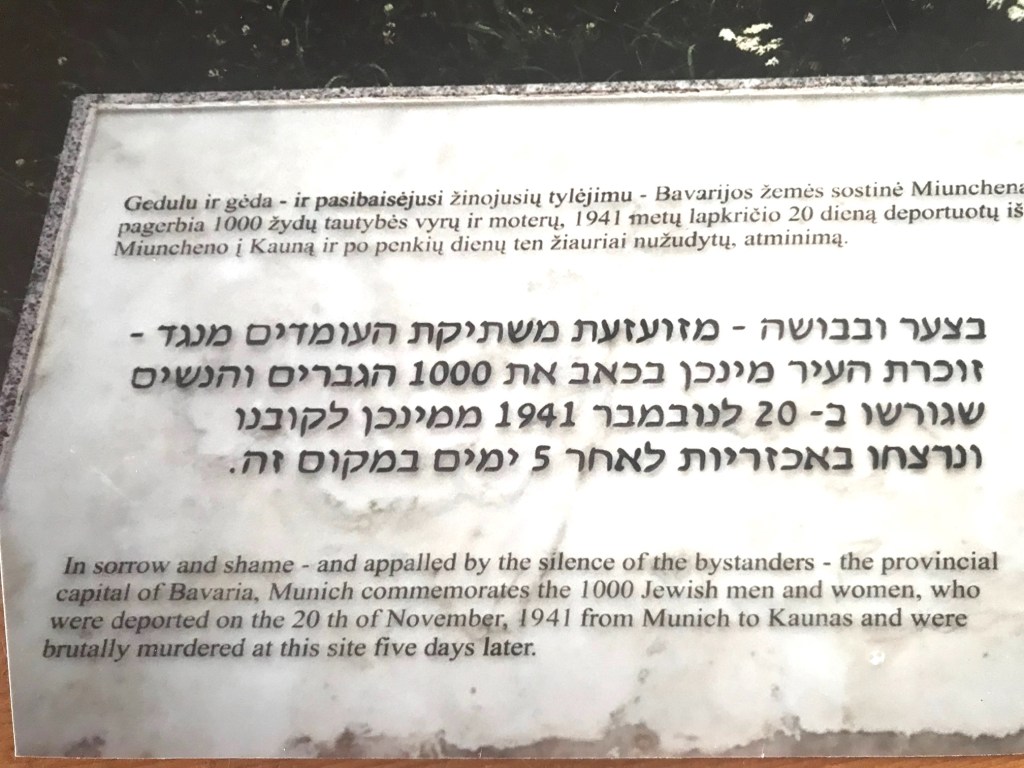
For those who want to take in some of the rest of this interesting country, the Coronian Spit, miles and miles on sand dunes on the border with the Russian enclave of Kaliningrad, and the seaside towns of Klaipeda and Palanga on Lithuanian’s Amber coast are worth a visit, as is the second city of Kaunas, once Lithuania’s capital. For those with an interest in historical sites, the Ninth Fort – site of massacres of the Jews during the second World War – is a horrific reminder of darker times, as is the old KGB headquarters, now a museum in central Vilnius.

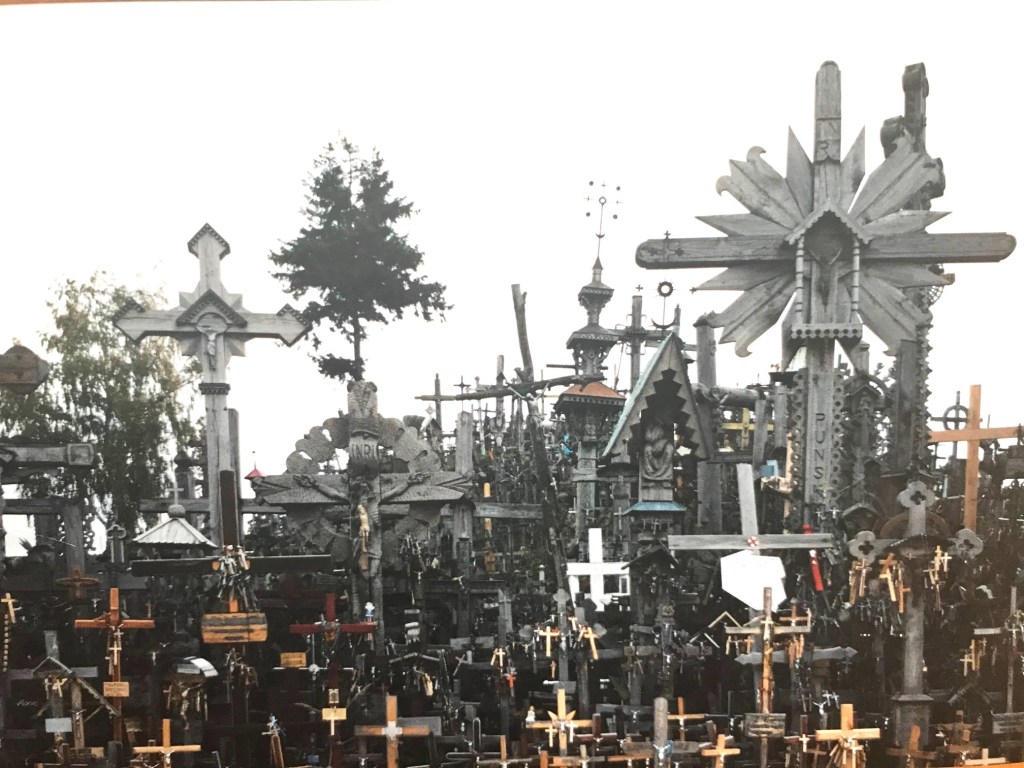
I also found the folk park at Rumiskes near Kaunas also well worth a visit, but the Hill of Crosses is a bit too remote from Vilnius. Near the north eastern town of Siauliai, it is a place of pilgrimage for Lithuanians, includes more than 100,000 crosses, and was established in the 19th century as a symbol of resistance to Russian rule. Locals still come on a daily basis to add their own crosses to the throng.
Grutos Park at Druskinkinai meanwhile is a centre for a rich collection of Soviet artefacts and statues, but it is also noted for its spa facilities, as is Birstonas near Kaunas, while the national park at Ignalina (not far from Visaginas) is definitely one for nature lovers. Nature is a big draw to Lithuania for those who are staying for more than a few days with lakes and forests everywhere.

 The 'Travel' Life of Brian