MENORCA: DESTINATION REPORT BY NATASHA WARCHOLAK
CAN you imagine the lush greenery of Ireland in blazing sunshine? A balmy Mediterranean island still immune to cut-throat tourism?
Welcome to Menorca, the eastern-most point of the Spanish territory and the second largest island of the Balearics.
Just 34 km away from its big sister Mallorca, Menorca attracts the Irish holidaymaker not because of its raving nightclub scene (so passé anyway), but because of its tranquillity, elegance and, of course, the weather. You can expect about 300 sunny days a year, with the summer months boasting 11 hours of sunshine every day.
Menorca is one of those places that has it all: it is a perfect destination for sea nature and culture lovers, good for sports enthusiasts, and great for those who simply wants to relax and enjoy the sun with family and friends.
To do
The island offers a wide range of activities with around 75 beaches and conditions ideal for water sports. Indeed, Menorca is perfect for windsurfing, sailing, waterskiing, scuba-diving and fishing. Ironically, Minorca boasts more beaches than Mallorca and Ibiza combined. And such a wealth of them!
Sandy beaches with turquoise waters, of which Cala Galdana stands out, are ideal for family fun in the sun, while deep water bays lend themselves for snorkelling and diving (Irish and British licences welcome). For those wishing to stay on (relatively) dry land, daily boat trips operate from the Port of Mahón.
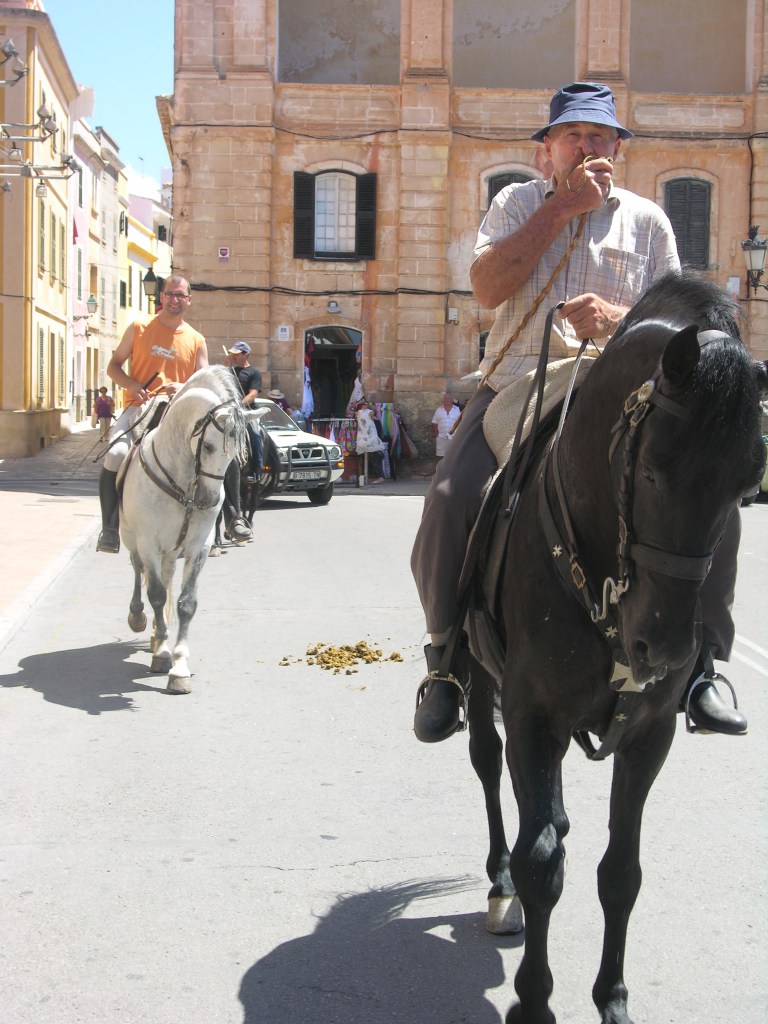
The verdant island lends itself to walking, hiking, golfing, cycle-tourism and horse-riding. The festival season starting in June in Ciutadella, Menorca’s old capital, with the San Juan fiesta, and ending in September with the Sant Nicolau fiestas in Es Mercadal is definitely a must.
To see
The south of the island in particular is very family-friendly. Within the island, communities and cultures fiercely maintain their regional specialities, and enticing Menorcan villages should not be missed. Menorca boasts so many megalithic stone constructions – some of them as old as 5,000 years – that it has won itself the status of an Open Air Museum. Of these, navetas (megalithic chamber tombs) and taulas (T-shaped stone ceremonial sanctuaries) are a must-see. Naveta des Tudons, the largest of navetas, can be found near Ciutadella – a kind of Minorcan New Grange.
Menorca has been declared a Biosphere Reserve by UNESCO and its local festivities have become a major attraction. Parque Natural de la Albufera des Grau, which is the area of the Biosphere Reserve enjoying the maximum protection level is perfect for kayaking and bird-watching.
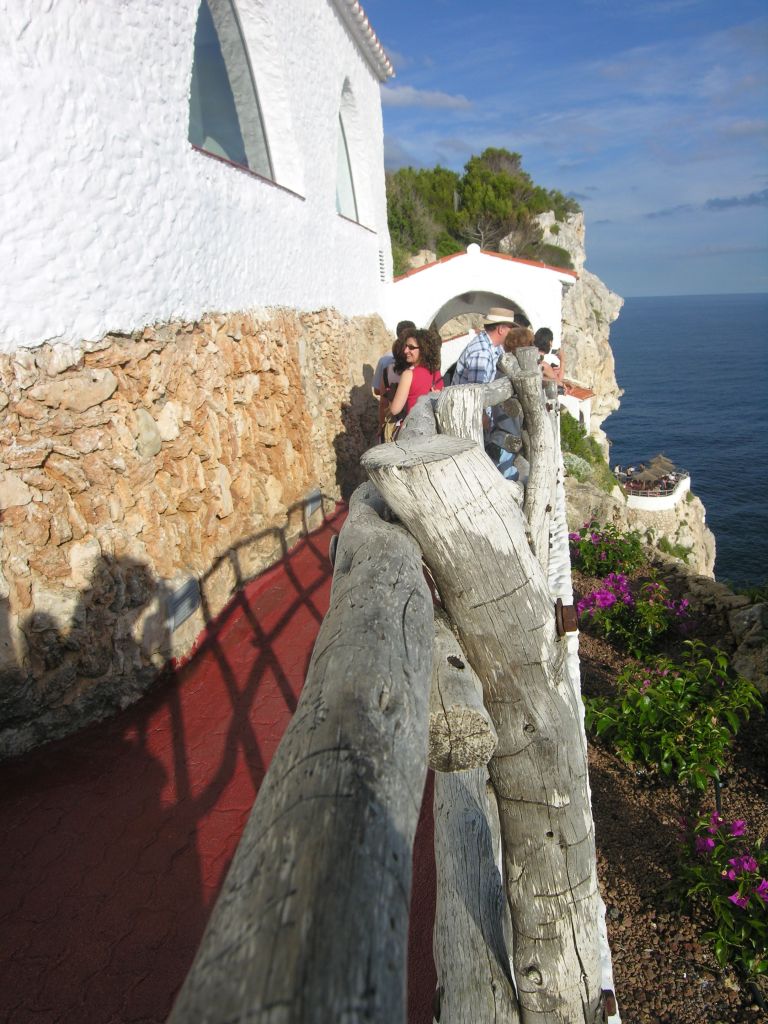
Bars and clubs nestling in caves on a sheer cliff face, offer spectacular views from dawn till dusk, the perfect place to chill out and watch the sunset.
Menorca is the greenest island in the Balearic combining sunshine and beaches, activity tourism, gastronomic delights, and the Camí de Cavalls, a coastal path circling the whole island. A distinctive feature of the Minorcan landscape is the dry stonewalls defining the field boundaries in a manner not dissimilar to the Mourne Country of County Down.
Maó (a.k.a. Mahón) and Ciutadella, the present and former capitals are definitely worth a visit. Ciutadella retains the charm of a fairytale, while Maó is more ‘formal’ and the only city in Spain to feature classical Georgian architecture, with traces of English design from door knockers to sash windows. The British moved the capital to Maó in 1722.
To eat and drink
Local wines are obviously a must. Red wine is often mixed with la casera, a local lemonade. Minorcan gin made from juniper is worth a try. Sometimes mixed with lemonade (and known as pomada), it is usually drunk during the fiestas.
Cheese is a Minorcan staple. Cheese production increased during the British presence on the island in 18th century and is still faring well. Varying in its maturity, the cheese can be eaten young (21-60 days), semi-cured (2-5 months) or mature (more than five months). Another staple is the celebrated mayonnaise. During Duke de Richelieu’s brief sojourn on Minorca, his chef invented a new sauce, based on the local allioli (consisting of garlic and oil) recipe. Mahonnaise was an instant hit and has gone on to achieve world domination.
Menorca boasts a myriad of small bakeries with food-to-go. Small sachets of mahonnaise and olive oil (but no vinegar or brown sauce) can be had with your takeaway food. Olives and capers grow wild for your delectation.
Although Mercadal is considered the gastronomic centre of Minorca, good food can be found everywhere. Fornells, a small picturesque town nestling in the Bay of Fornells, is renowned for its spiny lobsters, found in the local dish caldereta de llagosta (lobster stew). They are an irresistible attraction for King Juan Carlos who regularly sails from Mallorca just to sample a lobster.
Atmosphere
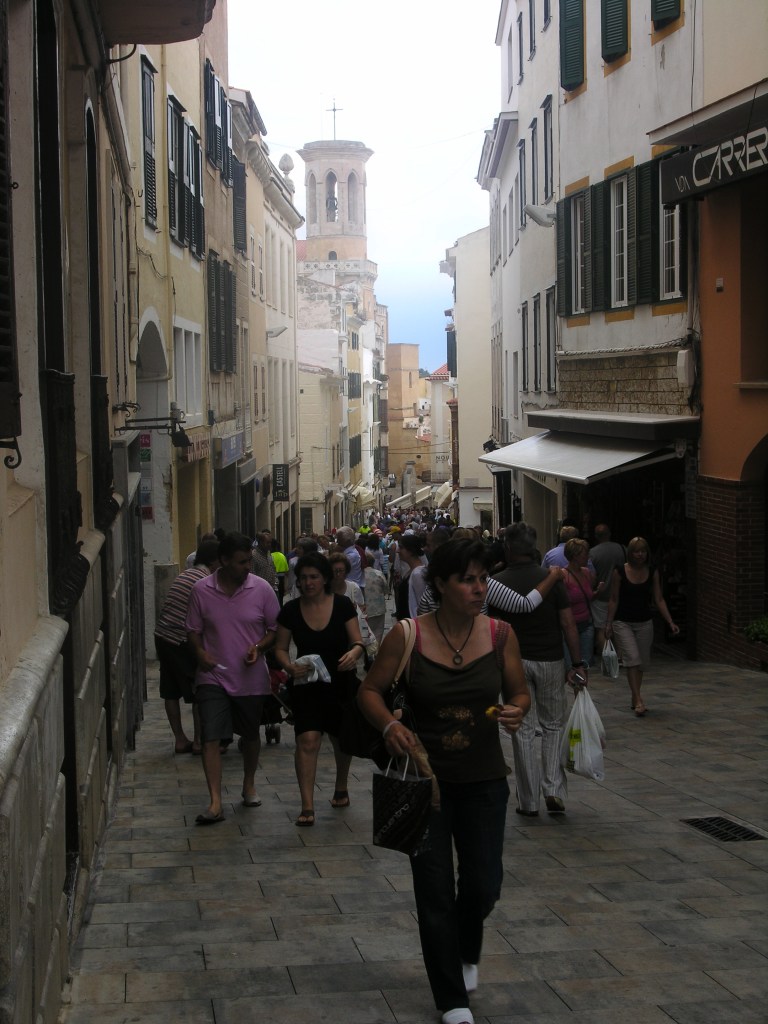
Experts and visitors agree that Menorca is simply lovely, and a very special place which weaves its own unique spell around the visitor. “People in the mainland Spain go ‘faster, faster’ all the time, but not here,” assures a friendly driver Sebastian. The notion appeals to the Irish. Whoever observed that no word in the Gaelic language conveyed the sense of urgency of mañana, had obviously not visited the island of Menorca.
Recurring visitors observe that this is largely because Menorca is the quietest of the other Balearic islands, and has not been yet spoilt by a mass invasion of tourists and developers. Small and with an old-time feel about it, the island is a good place for pottering around the unspoilt villages, hill-walking and sampling the fine local cuisine. It is less wild than Ibiza and less tourist-driven than Mallorca. As the slogan says, fall in love with Menorca!
Info:
Time: GMT+1
Currency: Euro
Language: Spanish and Catalan, an ancient form of Spanish with traces of French. Islanders also have their own Menorquín dialect.
Population: approximately 90,000

 The 'Travel' Life of Brian