… ESPECIALLY POIGNANT AT THIS TIME OF THE YEAR
IT’S almost 30 years ago now that I first visited the battlefields of Flanders and the historic, iconic town of Ypres in particular.
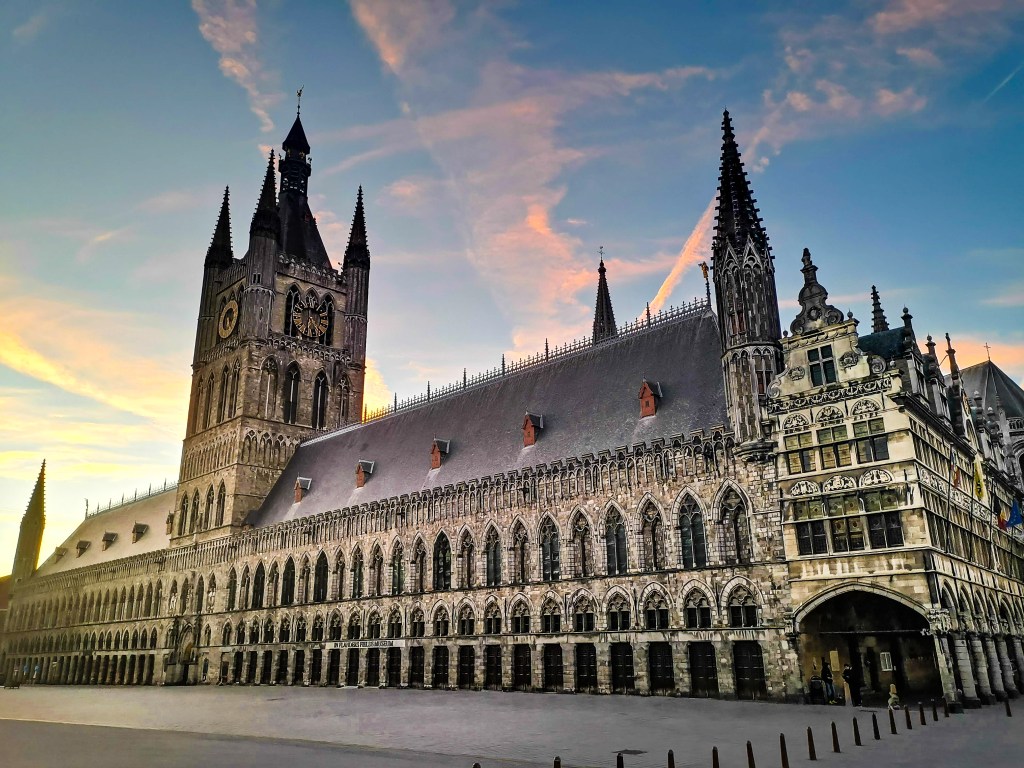
We were almost mesmerised by the stunning facade of the Cloth Hall in the truly magnificent market square – now home to the acclaimed ‘In Flanders Fields’ museum – and sat outside Old Tom’s Restaurant admiring the architecture of this beautiful Flemish town which was rebuilt from scratch after total devastation in WW1.
No building was recognisable, indeed hardly one brick stood on top of another in Ypres when the Armstistice was signed, a testament to the geographical significance of the town and its proximity to the worst of the fighting on the Western Front.
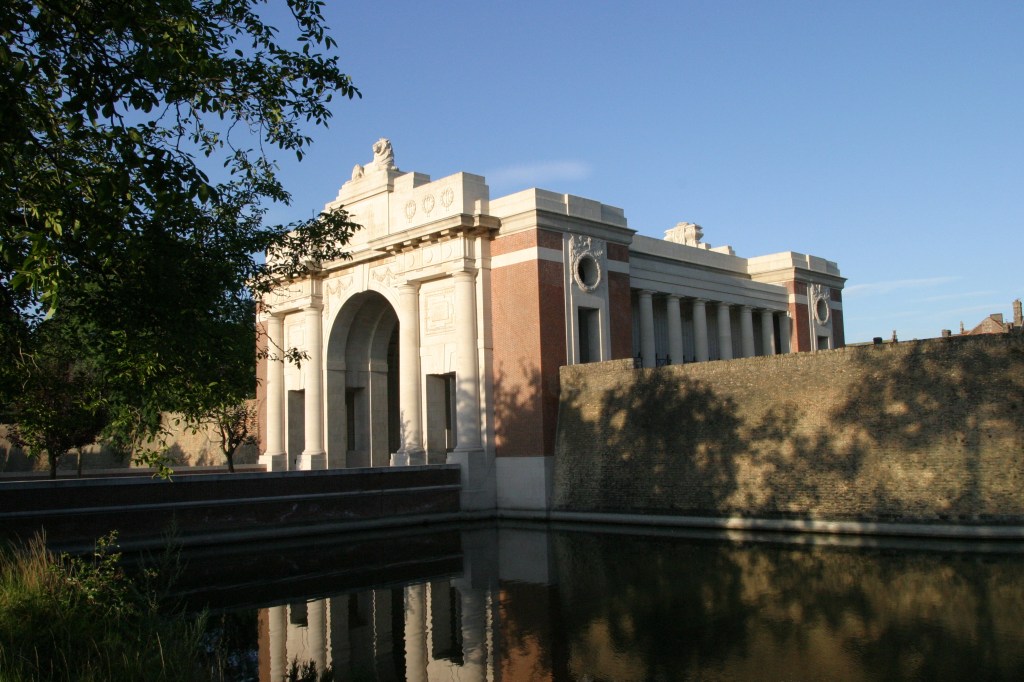
As we finished our meal (I think it was in 1990), we could not help but notice an increase in the number of people, locals and tourists alike, hurrying towards the main road out of town through the Menin Gate. We followed the crowds to experience for the first time the unique act of remembrance which has, since the mid-1920s, taken place every night at 8.00pm in all seasons, in all weathers, (except for the Second World War years when Belgium was again occupied by Germany).
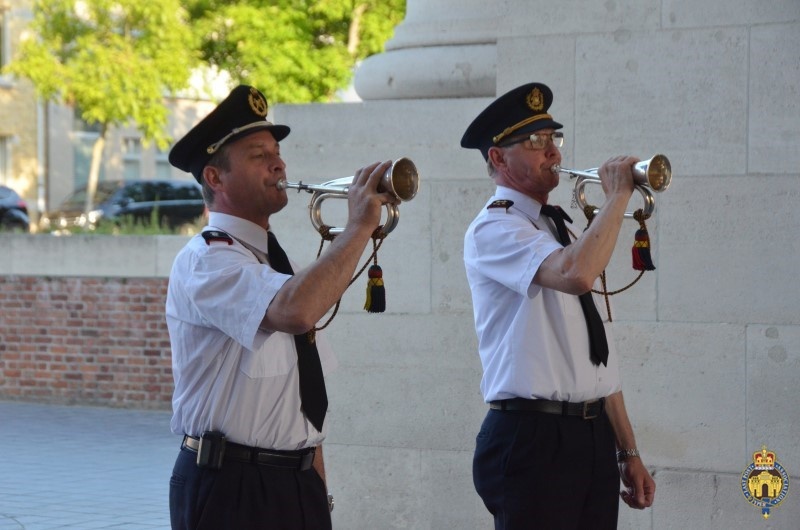
We stood in awe – and reverence – alongside hundreds of others under the arches of the Menin Guide as buglers from Ypres Fire Brigade performed the dignified ceremony of wreath laying and remembrance organised by the local, Last Post Association. Now I have been at the Menin Gate ceremony more than 20 times, and its significance never dims with age or familiarity.
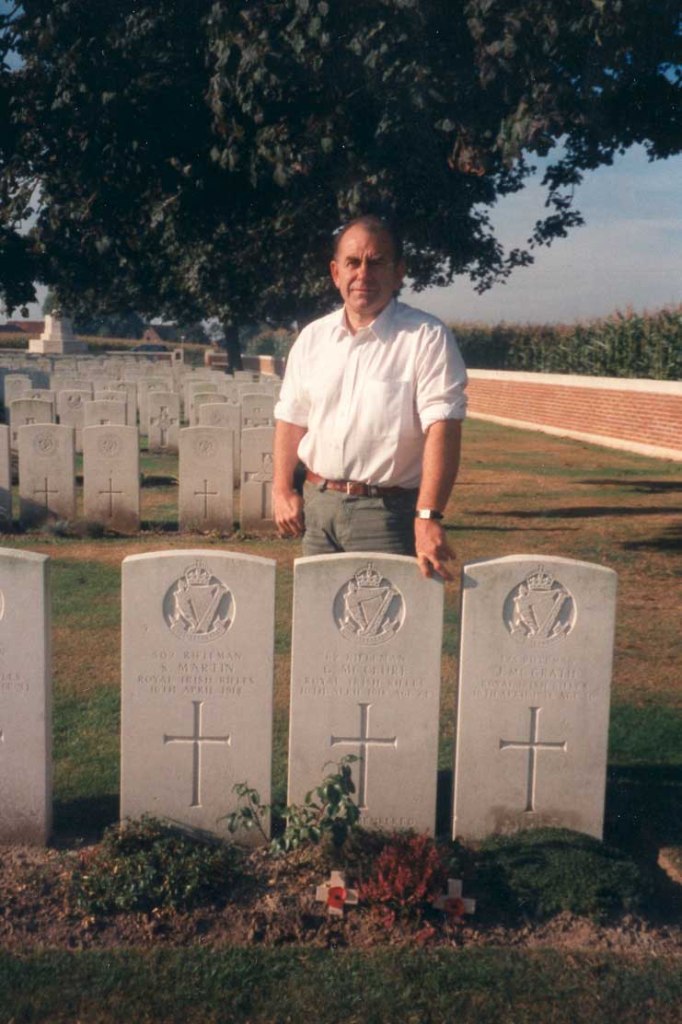
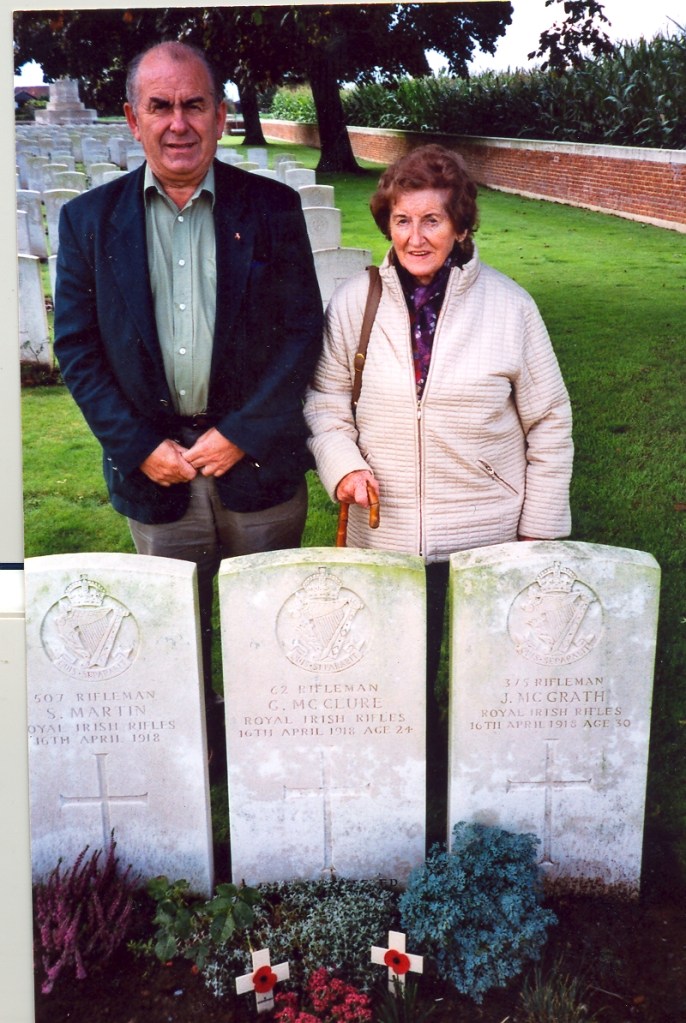
Just a few hours earlier I had a tear in my eye as we discovered the last resting place of my great uncle, Rifleman George McClure from Moira, County Down, in Canada Farm cemetery some three miles from Ypres, alongside four other members of the Ulster Division, one of them Rifleman Fred Law from Hillsborough.
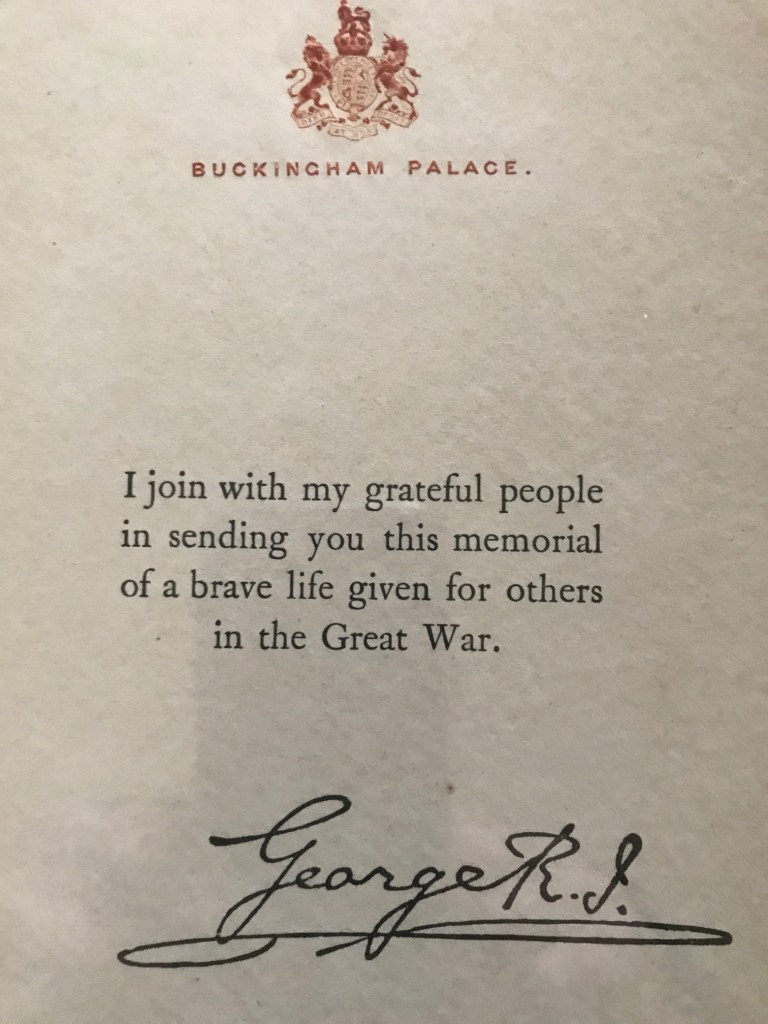
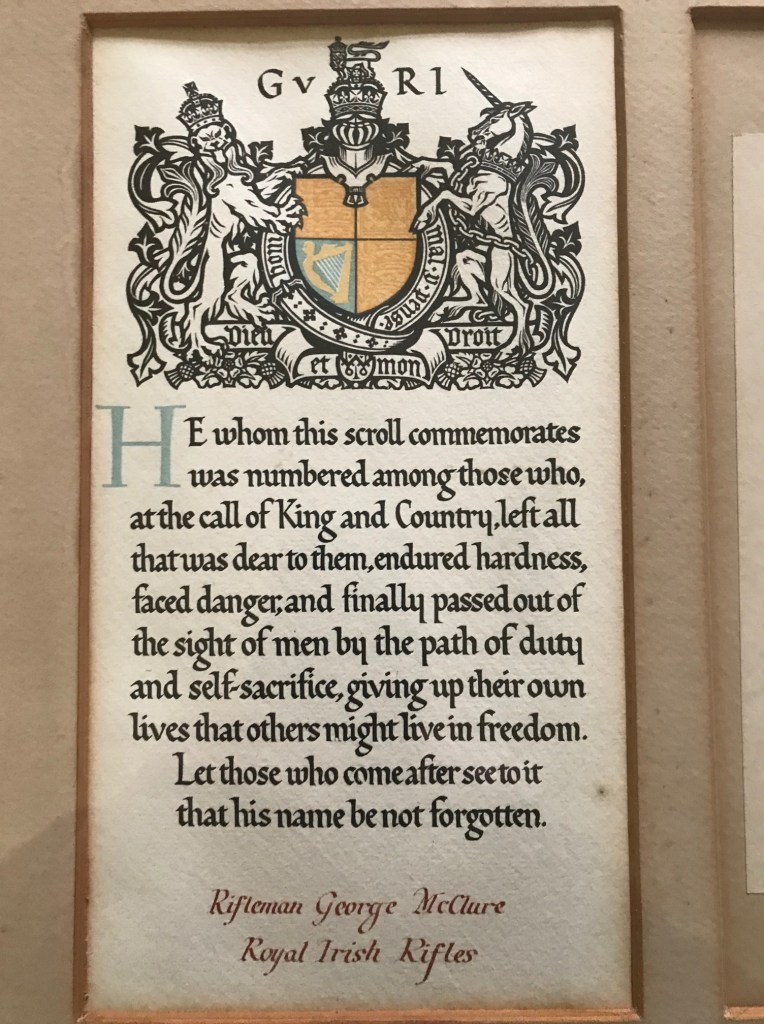
My mother’s (Tate) family previously did not have any information about what had happened to Rifleman McClure except for a message from King George V informing them that their relative had been killed in action and expressing the Palace’s condolences. But right through my childhood I had been intrigued by the framed message on the wall of my grandmother’s house which named my granny’s brother, my great uncle, and included the line: “Let those who come after see to it that his name be not forgotten.”
Even at a young age I was determined that one day I would find the last resting place of my mother’s uncle George, and make sure that King George V’s words would become reality.
However, the mistaken belief in my granny’s family was that her brother George had been killed at the The Somme, along with so many other Ulstermen. However, thanks to war records and a lot of digging by The Somme Association in Belfast (and I remember in particular to research by one Billy Ervine) I found that Rifleman McClure had in fact survived the horrors of the Somme, only to be killed near Ypres in West Flanders, in what was probably the third Battle of Passchendaele. If The Somme was horrendous, Passchendaele was worse, if that were possible… many hundreds of soldiers drowned in the mud as well as from rifle and shellfire.
A few years ago I found a copy of a handwritten letter from what I presumed to be the regimental padre, which revealed that George McClure was killed by shellfire while on sentry duty, and was buried at Canada Farm cemetery near Elverdinge – (Canada Farm I have since established was in fact a dressing station or field hospital, and the beautiful little cemetery containing many Ulstermen in its 800 or so plots, is marked by six Canadian Maple trees).
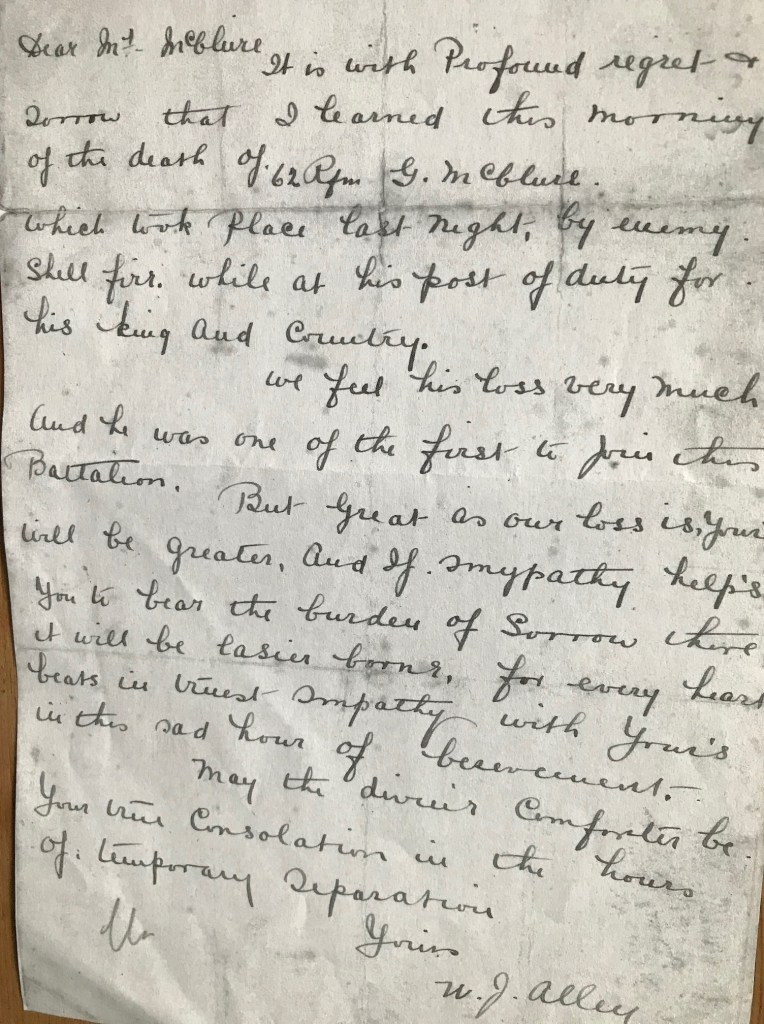
The text of the handwritten letter headed BEF (British Expedtionary Force) and dated April 18, 1918 is:
“Dear M McClure,
“It is with Profound regret and sorrow that I learned this morning of the death of 62 Rfm George McClure which took place last night, by enemy shell fire while at his post of duty for his King and Country.
“We feel his loss very much and he was one of the first to join this Battalion.
“But great as our loss is, Your’s will be greater, and, if sympathy helps you to bear the burden of sorrow it will be easier borne, for every heart beats in truest sympathy with your’s in this sad hour of bereavement.
“May the Divine Comforter be your true Consolation in the hours of temporary separation.
“Yours W J Allen”
Canada Farm lies off the Woosten Road, Elverdinge, with crossroads at each end re-christened Dromore Corner and Donaghcloney Corner by the soldiers on military maps of the time – a sign that fighting in the area involved a great number of local (County Down) volunteers.
When this awful Covid Virus emergency ends, or we learn to live with it, I look forward to putting fresh flowers and a little wooden cross on George McClure’s grave again, something which I used to do every year. And I will kneel once again to remember all who gave their lives for freedom…..
I will also visit St George’s Church in Ypres, and remember the poignant Service of Remembrance held for George McClure in May 2001, when a brass plaque in memorial to Rifleman McClure was dedicated in perpetual memory to one ordinary but at the same time extraordinary Ulsterman, but at the same time to everyone who paid the ultimate price and sacrifice for their friends and the free world…..
- As I mentioned in my piece on the Menin Gate and battlefield sites of Flanders and The Somme a few days ago on Facebook and my Travel Blog, The Travel Life of Brian, the ceremony at The Menin Gate still takes place daily, but without members of the public because of the virus. At present it continues with just a solitary bugler and The special Last Post on Armistice Day 11/11/2020 (at the exact time of the Armistice) at 11.00am will NOT take place this year. But the daily ceremony continues tomorrow and every day at 20.00 however.
For more information, about the Menin Gate ceremony visit: www.lastpost.be

 The 'Travel' Life of Brian