SHORT BREAK SPECIAL…. VIENNA
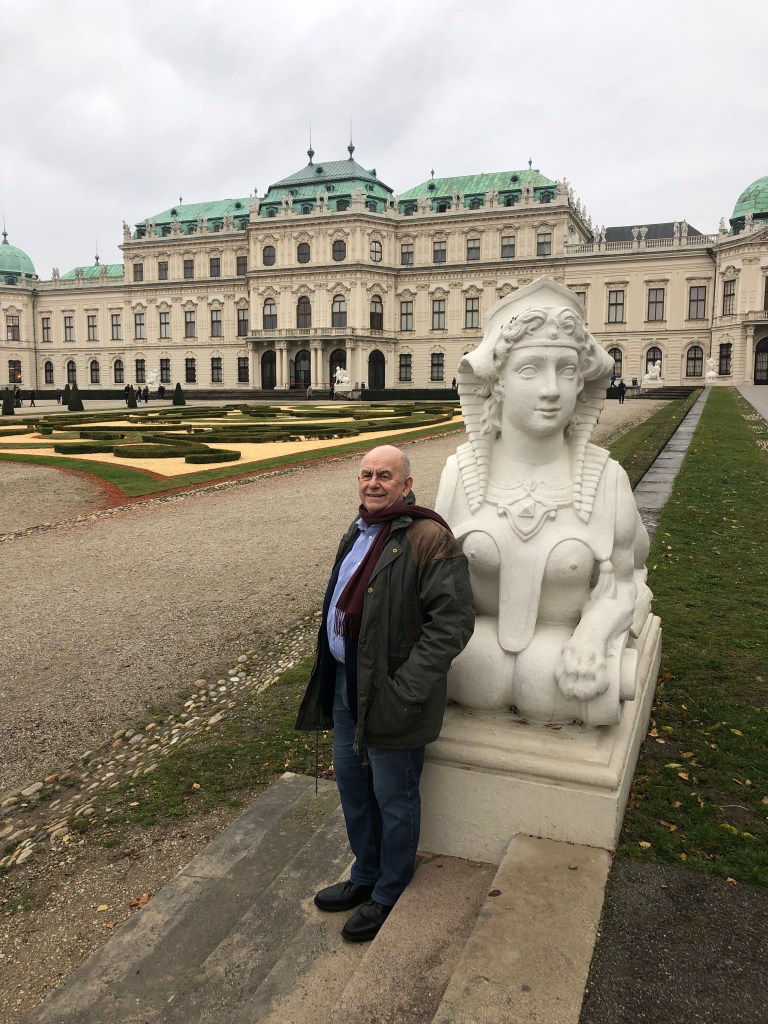
LET’S face it…. There is no bad time to visit Vienna!
But having to fly back home on the eve of the opening of the Austrian capital’s Christmas market season was surely as bad a time as it gets….
The sound of workmen hammering was everywhere as hundreds of Christmas market stalls in up to 25 major markets in different parts of the city were having the finishing touches applied, prior to the grand opening of the Christmas market season which lasts right through to New Year.
Miles and miles of twinkling coloured lights were being strung across streets and gantries and the smell of gluvin, punch, glogg or whatever local tipple was on offer, was everywhere.
Many rosy-cheeked, Christmas sweater festooned stall holders couldn’t wait for the official kick off to the market season and to be fair the cold, well muffled tourists couldn’t resist an additional antidote to the early winter frost in the air. It was the one product of the Christmas market which seemed to break the embargo of the official starting gun in the middle of November.
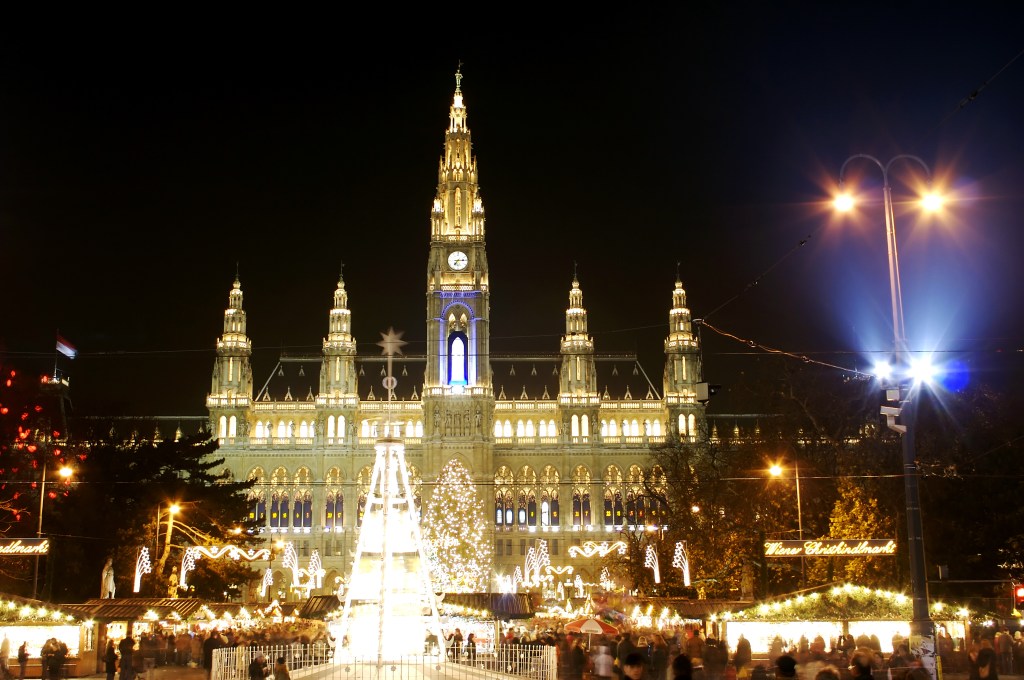
It was a big disappointment to miss the Christmas markets, but it did give more time in our brief hastily-arranged visit to catch some of the big attractions of the city.
The Schönbrunn Palace for example was just a couple of short tram journeys from our accommodation, the Rainers Hotel in the south of the city. It was good value at less than 90 Euro a night and just 100 yards or so from a number of local tram routes, including at least two which will have you at the Opera House in the middle of the city in 15-20 minutes.
Schönbrunn it is an unmissable attraction as the main summer residence of Austria’s Habsburg rulers. The 1,441 room Rococo palace is one of the most important architectural, cultural and historic monuments in the whole country, and has been a major tourist attraction for decades. In recent years it has been welcoming up to four million visitors a year and is the country’s most visited and most enduring tourist site.
Franz Joseph, the longest-reigning emperor of Austria, was born at Schönbrunn and spent a great deal of his life there. He died there, at the age of 86, in November 1916, and following the downfall of the Habsburg monarchy a couple of years later, the palace became the property of the newly founded Austrian Republic and was preserved as a museum.
But Schönbrunn is far more than just a huge palace, there are many hectares of gardens, indeed there is even a zoo in the grounds – the Tiergarten – which claims to be the oldest zoo in the world. There’s also the Wüstenhaus Schönbrunn, a desert botanical exhibit, an orangerie, palm house, and most striking, on a 60 metre high hill, the Gloriette, an eye-catching structure glorifying Hapsburg power above the impressive Neptune fountain and Great Parterre garden which also includes a maze.
So it’s quite possible – if you have the time – to spend a whole day there.
Like the main attractions in the popular European cities, it is essential to book in advance, and skip the queues. We had purchased three-day Vienna Passes which gives free admission to most museums and attractions, but in the case of Schönbrunn we still had to wait the most of an hour in two different queues until we accessed the house.
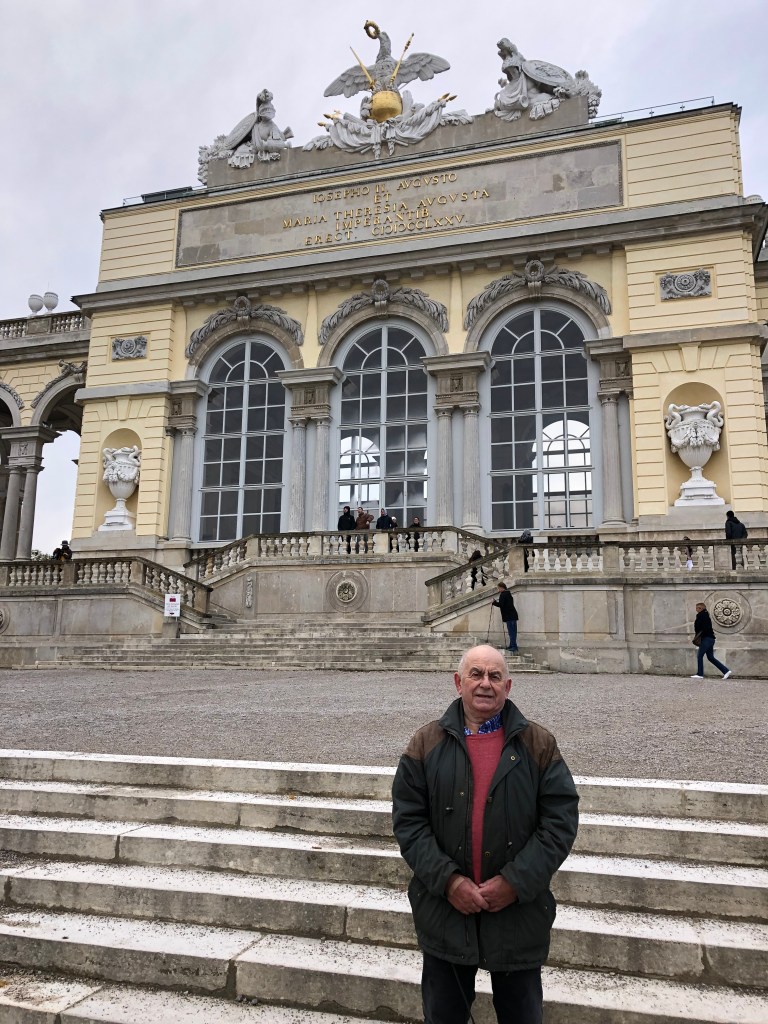
It was a superb place to visit, but a big disappointment was that there was no photography of any kind allowed.
Again, as we were leaving, they were starting to a assemble a Christmas market in front of the palace, an absolutely stunning setting which has been used in numerous films including at least one James Bond movie.
Our three-day trip meant to Vienna meant we had to restrict our ‘palace’ visits so after The Schönbrunn, we went for the The Belvedere, a historic complex consisting of two Baroque palaces (the Upper and Lower Belvedere), an Orangery, and the Palace Stables.
The buildings are set in a Baroque park landscape in the south eastern district of the city, just four stops on a number 18 tram from our hotel, (or a half hour walk or so), and houses the Belevedere Museum. The grounds include decorative tiered fountains and cascades, Baroque sculptures, and majestic wrought iron gates.
Indcidentally we bought three day transport passes which were extremely good value and it took no time at all to familiarise ourselves with the great, smooth running tram system. Unlike most metros, we got seats on board every time!
The Belvedere was built during a period of extensive construction in Vienna, which at the time was both the Imperial capital and home to the ruling Habsburg dynasty.
Main attraction at the Upper Belvedere is ‘The Kiss’ by Gustav Klimt, which dates from 1907/08 and is the most famous Austrian painting and the highlight of the permanent collection. It dates from 1907/08 at the height of Klimt’s ‘Golden Period when the artist developed a new technique of combining gold leaf with oils and bronze paint.
The Austrian state purchased the Kiss for the new Moderne Galerie, which was housed at the Lower Belvedere, from its first exhibition in 1908 and the painting has been in the Belvedere’s collections ever since. It’s The Belvedere’s Mona Lisa and you will usually have to fight for a spot to get a picture without including a dozen other, usually Asian, tourists.
The Hofburg Palace is a must-see when visiting Vienna although we didn’t have the enough time to do it justice. Set right in the centre of the city the palace is the seat of the Austrian President. With a variety of museums such as the Imperial Treasury, art galleries and prestigious collections, there’s plenty to be discovered. Highlights include The Imperial Apartments, the Sisi Museum, and the Imperial Silver Collection. And we certainly found the Sisi Museum to be the most interesting.
Visitors are invited to learn about the legendary Empress Sisi (Elisabeth) through a dedicated museum to her life, examining her character and habits. With over 300 personal items, visitors can trace the life of this legendary Empress from the clothes she wore, her poetry, her beauty recipes and even an insight into her imperial carriage.
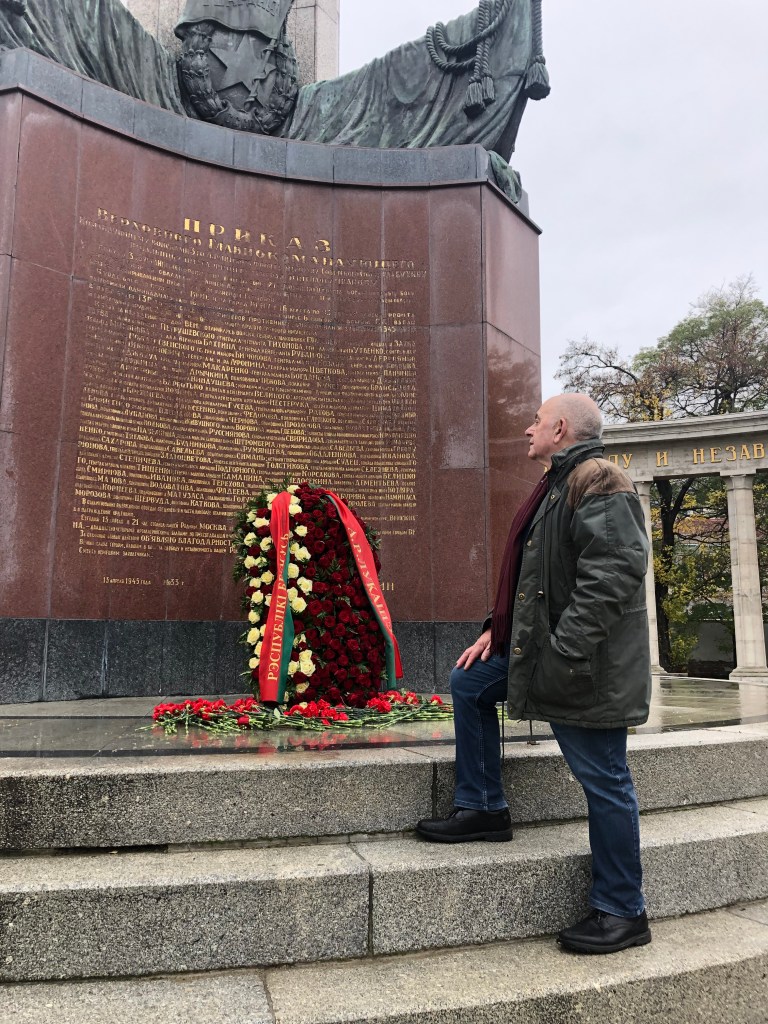
The Hofburg Palace was originally a fortified castle which dates back to the 13th century, and has been called a city within a city. It encompasses 18 wings, 19 courtyards and over 2,600 rooms. The Silver Collection features 7,000 items – some of which measure up to 30 metres in length
Hofburg Palace is a sprawling hub of imperial power and was home to the Habsburgs for over 600 years. Each member of the family had their own apartments or suites in one of the many wings. and each was lavishly decorated in the Empire, baroque and Rococo style.
Time constraints prevented us visiting the famous Spanish Riding School, the renowned institution and tradition that has been part of Vienna’s rich culture since 1565. The traditional riding school for Lipizzan horses perform their equestrian skills to audiences daily in the Hofburg Palace.
However, as we found out too late on our visit, the chances to watch the horses going through their training (for free) only takes place Tuesdays to Fridays and we left it too late to book a place at one of the Lipizzaner shows. However, next visit, for the Christmas Markets, it will definitely be first on the list.
For more info on the Vienna Pass, log on to https://www.viennapass.com

 The 'Travel' Life of Brian