BY BRIAN OGLE
IT IS not unusual to see the flags of many nations representing their country’s sacrifices at war memorials all over Mainland Europe – and especially in Belgium and France.
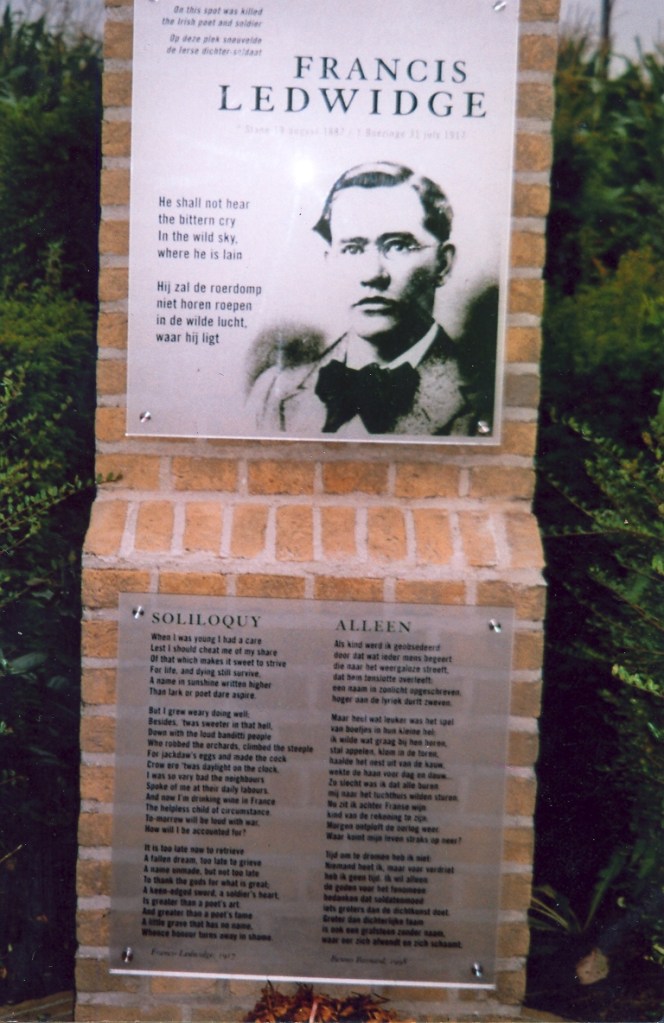
And an Irish tricolour, fluttering in the breeze above a memorial at a road junction just outside the village of Bozinge on what was the First World War battlefield of Pilckem Ridge, Flanders, proclaims the memory of a highly talented but little known (at least on this side of the Border) Irish poet Francis Ledwidge.
Had he survived the First World War, Ledwidge, from Slane, County Meath, was tipped to become every bit as famous as none other than the great Scotttish bard Rabbie Burns.
Although regarded as a Great War poet, just nine of Ledwidge’s 200 poems featured the War. But even though his life was cut short by a shell as he and his squad carried out repairs to the road just outside the village of Boezinge, he is said to have penned his greatest works not only in the trenches of Flanders, but during service at Gallipoli and in the Battle of Arras, also on the Western Front.
Underneath an image on the memorial of Ledwidge, killed on July 31, 1917, is a line from his most famous poem, ‘Lament for Thomas MacDonagh:’ “He shall not hear the bittern cry in the wild sky where he is lain”.
And if these words in tribute to nationalist leader McDonagh are not emotive enough, his poem Soliloquy, reproduced in full on the memorial stone are even more poignant and emotive… particularly the last verse, which reads:
“It is too late now to retrieve
A fallen dream, too late to grieve
A name unmade, but not too late
To thank the gods for what is great;
A keen-edged sword, a soldier’s heart,
Is greater than a poet’s art.
And greater than a poet’s fame
A little grave that has no name.”
Some maintain that another line: “Whence honour turns away in shame” was later removed by the British for political reasons. In any event, it does not appear on the memorial.
Lines from Soliloquy also appear on one of the half-dozen granite stone plinths at the entrance to the Ireland Peace Park at Messines, just a few miles away, also in the Ypres Salient.
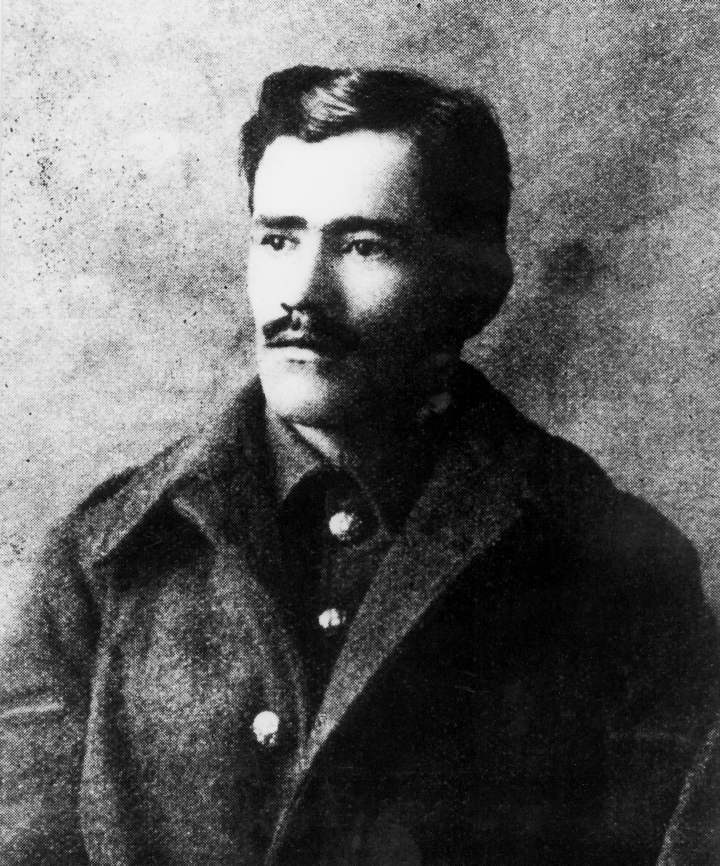
The son of a poor labourer in Slane, County Meath, Ledwidge left school at 14 and worked at various manual jobs while nurturing his skills as a poet. His talent was recognised by a well known author of the time Lord Dunsany who introduced him to the Dublin literary scene.
Although possessing moderate Irish nationalist views he joined the British Army in 1914 on the basis that it was unreasonable to expect others to fight for the freedoms that he would later enjoy. He also believed he was furthering the cause of Irish independence from Britain.
A year after the war began he had an initial volume of 50 of his poems published as Songs of the Field. When recovering from war wounds in hospital in Manchester he heard about the Easter Rising in Dublin and the executions of the leaders that followed it. Distraught, he penned his best-known poem in memory of his friend Thomas McDonagh.
Despite surviving the harsh conditions of Serbia, Gallipoli and Arras he was killed in Flanders in the Third Battle of Ypres, also known as Passchendaele, when a shell burst beside his work party. He is buried just a few hundred yards from the place of his death, in Artillery Wood CWG cemetery – the log book at the entrance will help you find his plot, together with those of his comrades from the Royal Inniskilling Fusiliers who were killed with him.
Anyone interested in learning more about this rare talent cut short by war can do so by visiting the Francis Ledwidge Museum, in his cottage birthplace at Slane, Co Meath. It is described as a perfect example of a 19th century farm labourer’s dwelling and opened as a museum in 1982.
In the beautiful and tranquil garden to the rear stands a replica of the original monument commissioned and erected by the City of Leper (Ypres) Belgium, at the exact spot where he was killed. Incidentally, a selection of his poems with a foreword by our own Seamus Heaney has been published in recent years. But for further information about the museum and Ledwidge himself, log on to http://www.francisledwidge.com
Ironically, Ledwidge was one of many notaries, including Lord Edward Carson, who a month or so before his own death had paid tribute to one of the best known and most effervescent Irishmen killed in the Great War, Willie Redmond.
There are many stories of particular interest to visitors from this part of the world in the Ypres salient, but the story of Major Willie Redmond, the nationalist MP for Fermanagh North is certainly one of the most colourful.
He is buried just a few miles from Ledwidge at Locre (Loker) near Mount Kemmel and like the poet joined the British Army despite having nationalist sympathies. Redmond in fact was a noted supporter of the Home Rule movement and was ejected several times from the House of Commons after rows with Unionist MPs.
At the outbreak of World War I there was a call for Irish volunteers to enlist in Irish regiments of the 10th and 16th Irish Divisions in the New British Army in the hope this would strengthen the cause of later implementing the Home Rule Act, which had been suspended for the duration of the War.
William Redmond was one of the first to sign up – addressing huge crowds encouraging voluntary enlistment in support of the British and allied cause.
He felt that he would best serve Ireland in the firing line on the basis that “if Germany wins we are all endangered”.
He became a captain in the Royal Irish Regiment at the age of 53 and went to France with the 16th Irish Division. He was soon in action, winning a mention in dispatches from none other than Sir Douglas Haig and promoted to Major. He was not pleased however when he was posted away from the Front and promptly begged his superiors to transfer him back to the action.
Redmond was convinced the shared experiences of the trenches was bringing Protestant and Catholic Irishmen together and overcoming the differences between the two traditions.
He said: “It would be a fine memorial to the men who have died so splendidly if we could, over their graves, build a bridge between the North and South. No one could help doing so when one finds that the two sections in Ireland are actually side by side holding the trenches.”
He succeeded in obtaining permission to go back to the front line and rejoining his old battalion, A Company of the 6th Battalion Royal Irish Regiment. Now 56, ‘he spoke to every man’ the night before the great attack on Messines Ridge where Irish troops of the 16th Division and the 36th Ulster Division advanced shoulder to shoulder in the attack on the small village of Wytschaete (referred to as White Sheet by the Tommies).
Redmond was one of the first out of the trenches but was hit almost immediately, suffering wounds to his wrist and leg. He continued to urge his men on from where he had fallen until stretcher bearers, ironically from the 36th Ulster Division, notably Private John Meeke of the 11th Inniskillings, brought him to the field hospital, at the Catholic Hospice at Locre, but he died that afternoon, probably from shock.
His death caused grief “worldwide” according to reports at the time, and is said to have made more impact than nearly every other British Empire fatality in the Great War.
His family received hundreds of messages of sympathy including one from Francis Ledwidge who was to die just a few miles away from Redmond at Pilckem Ridge the very next month.
The French posthumously awarded Redmond the Legion d’ Honour and he was buried in a single grave which stands on its own in a cornfield outside the Locre Hospice CWG Cemetery where men of his brigade are buried. The story goes that soldiers of the Ulster Division made a donation of £100 – no mean sum in those days – to a memorial fund and formed a Guard of Honour at his burial.The local people of the village of Locre continue to mark his grave to this day, organising annual commemoriations while Redmond’s Bar in the village of Locre is named after him.
When I was last there the grave was a symbol of inclusiveness and hope for the future of both parts and traditions in Ireland; and of a man whose dream was to see the two live peacefully side by side. His grave was marked by Poppy crosses alongside a miniature Irish tricolour.
In Wexford there is a bust of Major Willie Redmond in Redmond Park, while in Dublin all Irishmen who died in the war are commemorated in the National War Memorial Gardens, and of course at the Ireland Peace Park at Messines.
There are many other stories of Irishmen, unionist and nationalist, to be followed up from their last resting places in Flanders Fields. Some roads in the Ypres Salient were even re-christened with British and Irish names by the soldiers who fought there. My own great uncle, Rifleman George McClure from Moira, for example is buried at Elverdinge outside Ypres in a CWG cemetery between ‘Dromore’ and ‘Donacloney Corners’, indicating the strong links between this part of Flanders and County Down.
INFO ON FRANCIS LEDWIDGE:
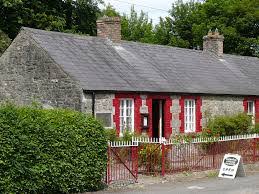
THE Francis Ledwidge Museum is in the cottage where the poet was born, just outside Slane, County Meath. It houses original letters, poems and memorabilia. Visitors can view Ledwidge’s life story displayed on wall panels or wander around the beautiful and tranquil garden with its flowers and wildlife. It is open every day, from 10.00am until 3.30pm until March 31, and from 10.00am until 5.00pm from April 1 to October 27. Contact Francis Ledwidge Museum and War Memorial Centre CLG, Janeville, Slane, Co. Meath, Ph: +353 (0)41 9824544, website: http://www.francisledwidge.com.
For further information on British cemeteries in the Ypres Salient log on to the Commonwealth War Graves Commission’s website http://www.cwgc.org
The town of Ypres is the best base for a stay in the Flanders Fields. It is well served by hotels and restaurants, although beds are sometimes hard to come by when there are anniversaries of specific events, and of course around November 11 itself.
There is an excellent museum ‘In Flanders Fields’ in Ypres – log on to http://www.inflandersfields.be/ and the local tourist office is also situated in the superbly restored Cloth Hall, http://www.ieper.be
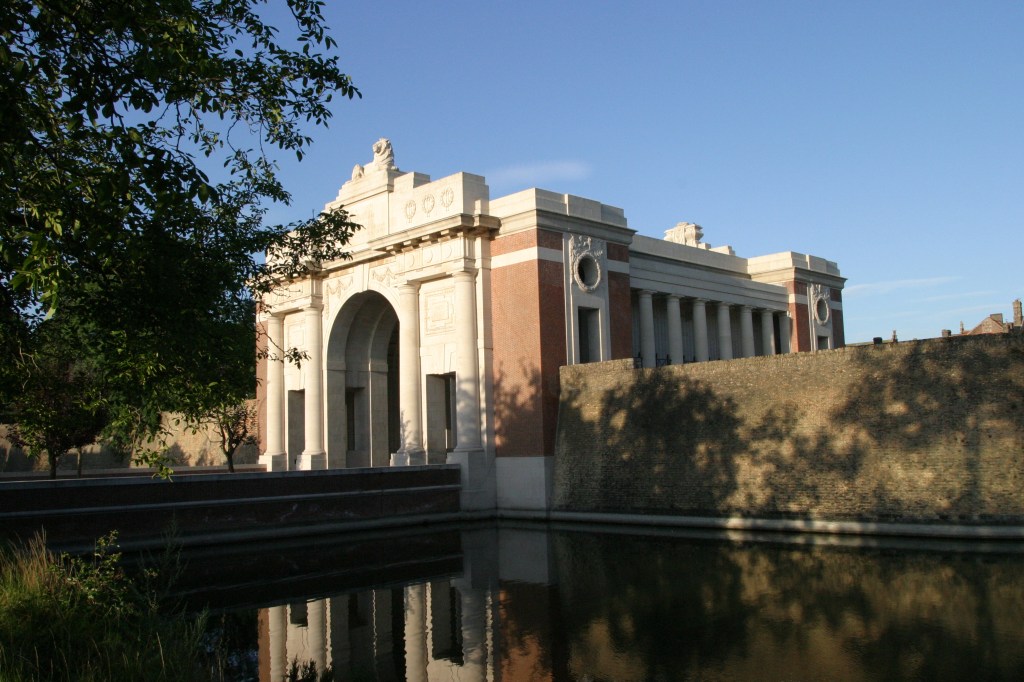
The Last Post ceremony takes place each evening at 8.00pm under the Menin Gate on the main route out of Ypres to the Front, and in case the cynics suggest that it is more to do with tourism than commemoration, it has been happening every day, hail, rain or shine, summer or winter, since the early 1920s… bar of course during the Second World War when the German occupation forces banned it from taking place. For more info log on to http://www.lastpost.be/

 The 'Travel' Life of Brian